In the UAE, people spend most of the day indoors in air-conditioned spaces. Buildings are sealed against heat and dust, which saves energy but makes ventilation more important. When fresh air is not supplied properly, carbon dioxide from occupants builds up, and people feel tired, distracted and uncomfortable without knowing why.
Key takeaways
CO₂ is a reliable sign of how well a room is ventilated.
Many guidelines use about 1,000 ppm as a sign to review ventilation.
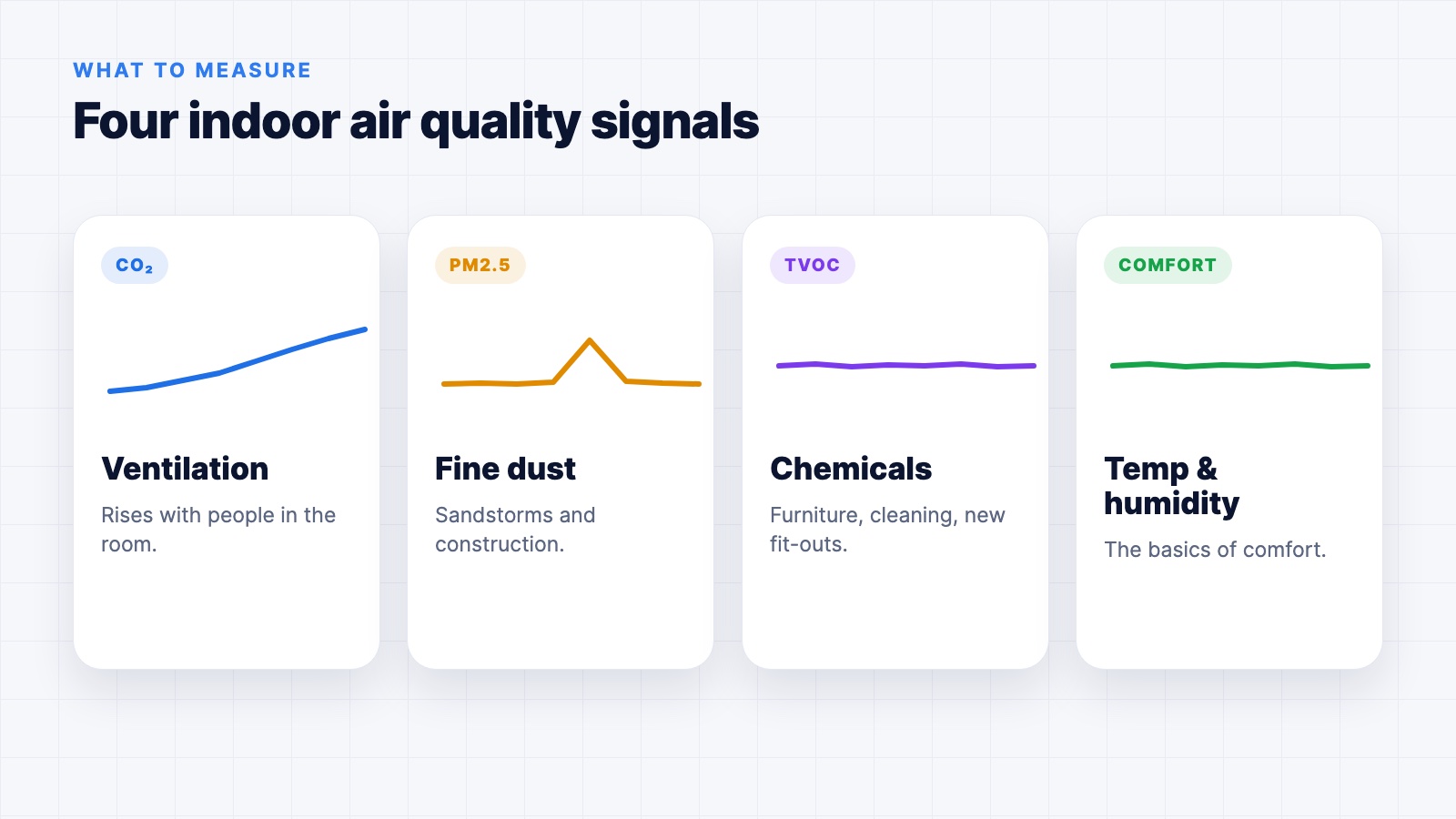
Multi-sensor devices also cover PM2.5, TVOC, temperature and humidity.
Ventilation that follows occupancy saves energy in a hot climate.
Why CO₂ is a useful indicator
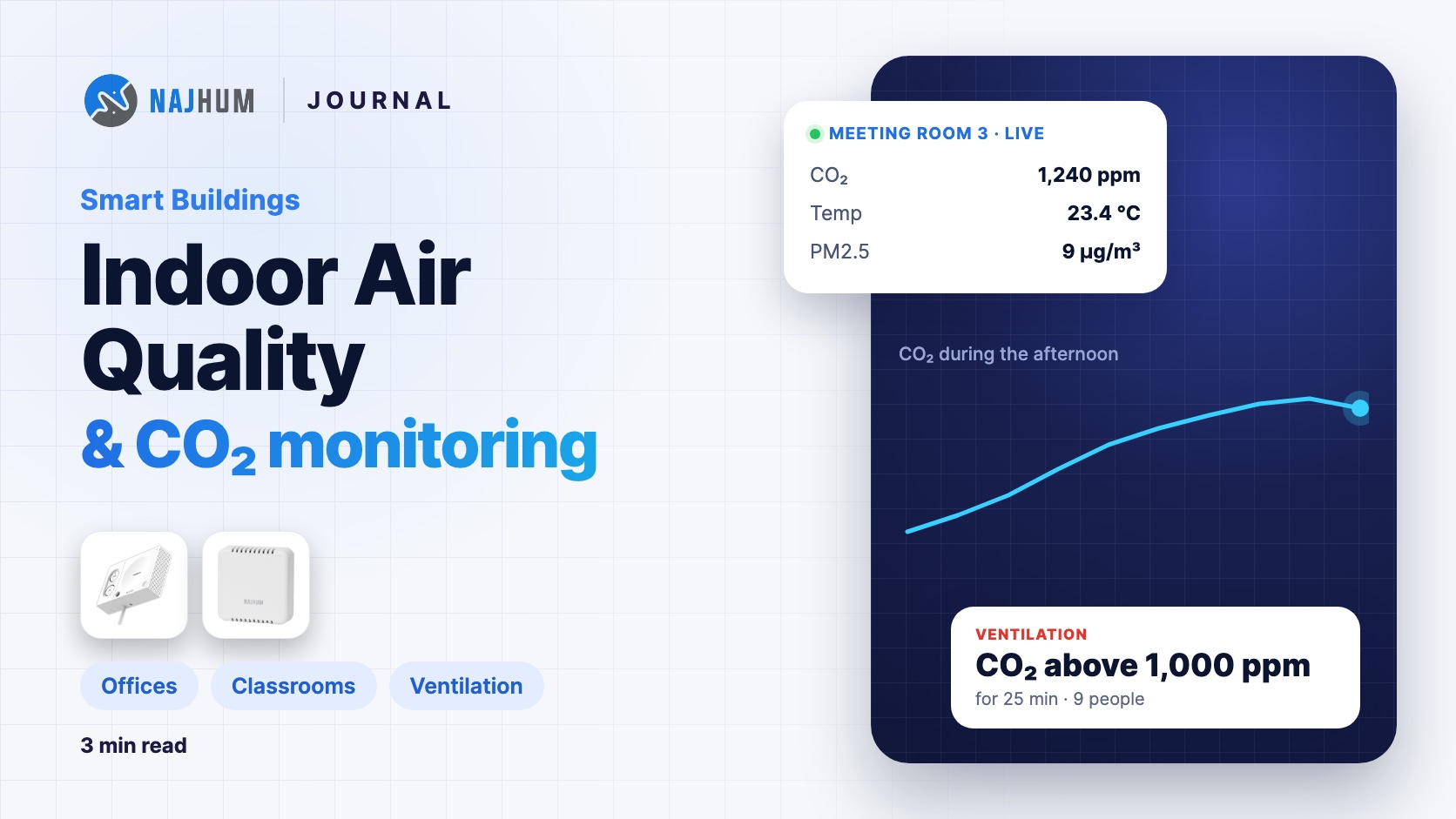
CO₂ itself is not usually harmful at typical indoor levels, but it is a reliable sign of how well a space is ventilated relative to the number of people in it. Outdoor air is around 420 ppm. Many building guidelines use roughly 1,000 ppm as a sign that ventilation should be reviewed, and research has linked higher levels with reduced concentration. A meeting room that climbs well above that during every afternoon meeting is telling you something about its air supply.
What else to measure
Temperature and humidity: the basics of thermal comfort.
PM2.5 and PM10: fine dust, relevant in a region with sandstorms and construction.
TVOC: volatile organic compounds from furniture, cleaning products and new fit-outs.
Light and noise: useful in classrooms and open-plan offices.
Multi-sensor room devices measure several of these in one unit, which keeps installation simple.
A meeting room that climbs past 1,000 ppm every afternoon is telling you about its air supply.
Offices: comfort and productivity
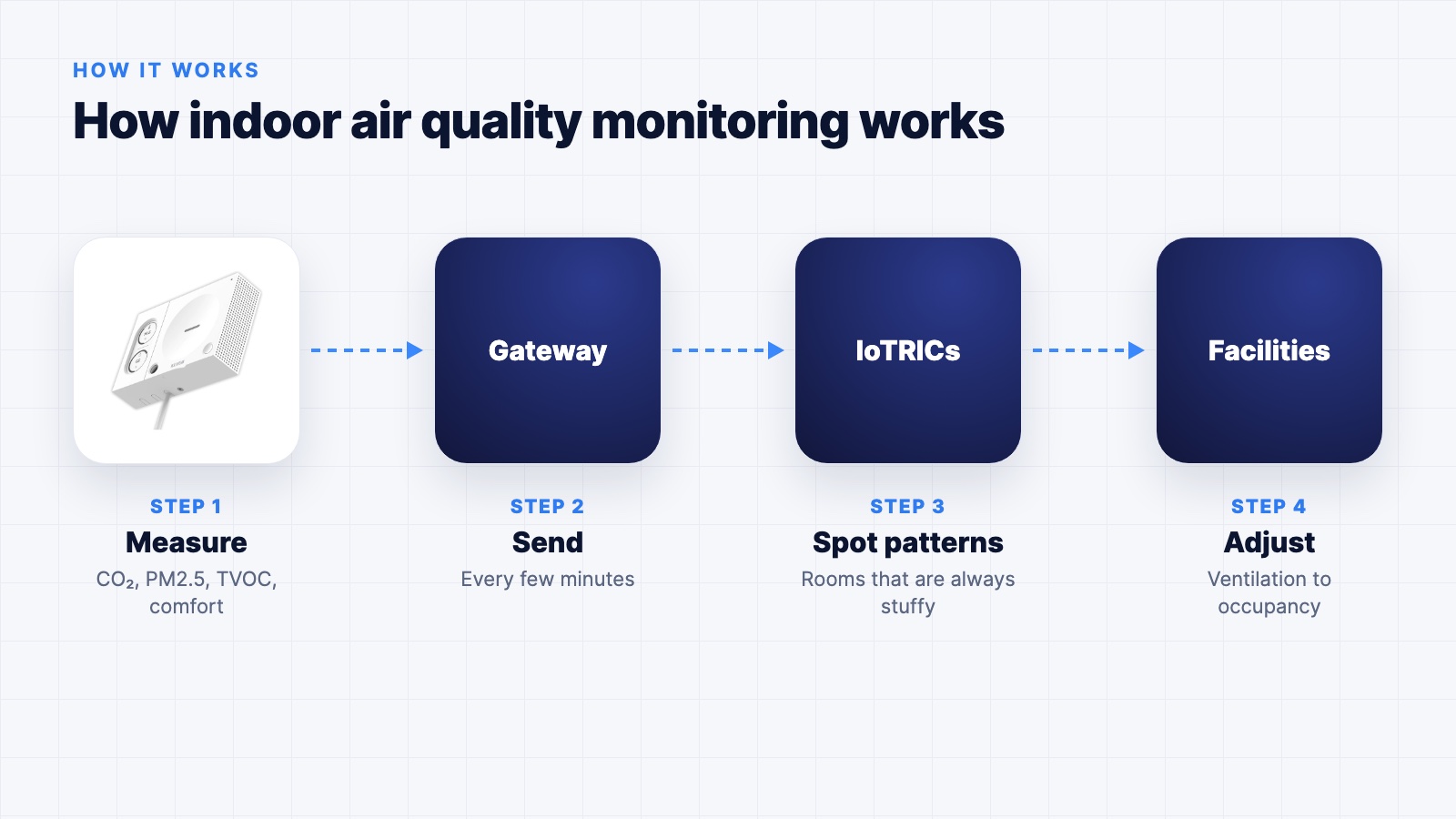
In offices, IAQ data helps facilities teams find rooms that are consistently stuffy, check that ventilation schedules match occupancy, and respond to complaints with evidence. It also supports green building and wellness certification efforts where indoor environment is part of the assessment.
Classrooms and lecture halls
Classrooms hold many people in a small space for long periods, so CO₂ rises quickly. Monitoring lets schools and universities see which rooms need ventilation adjustments and whether timetables put large groups into rooms not designed for them.
Balancing air quality and energy
More fresh air means more air to cool, which costs energy in a hot climate. IAQ data allows ventilation to follow actual occupancy instead of running at maximum all day. Spaces that are empty or lightly used can reduce fresh air, while busy rooms get what they need.
Turn readings into action
Show occupants a simple status, set alerts for sustained high CO₂ rather than brief peaks, and review weekly trends with the facilities team. On IoTRICs, room readings can be shown by floor and building, so patterns stand out quickly.
Frequently asked questions
Is CO₂ dangerous at office levels?
Not usually, but it shows whether ventilation keeps up with occupancy, and higher levels have been linked to reduced concentration.
Will more fresh air raise energy bills?
Ventilating to actual occupancy, not maximum all day, balances air quality and energy.
Does IAQ data help with certifications?
It supports green building and wellness efforts where indoor environment is assessed.
Give every room air people can think in.
IAQ monitoring is part of our universities and facility management solutions. Book a demo to see room data on IoTRICs.