Food businesses in the UAE are expected to show that chilled and frozen products have been kept at safe temperatures throughout storage. For many operators, that evidence still comes from a clipboard on the cold room door or a standalone data logger downloaded once a week. Both create a record. Neither stops a problem while it is happening.
Continuous wireless monitoring closes that gap. It records the temperature every few minutes and alerts someone the moment conditions drift.
Key takeaways
Loggers create a record but don't stop a problem while it happens.
Measure air temperature, humidity, door status and compressor current.
Use thresholds with time delays so staff trust the alerts.
Continuous data gives inspection-ready records for any period.
What to measure in a cold room
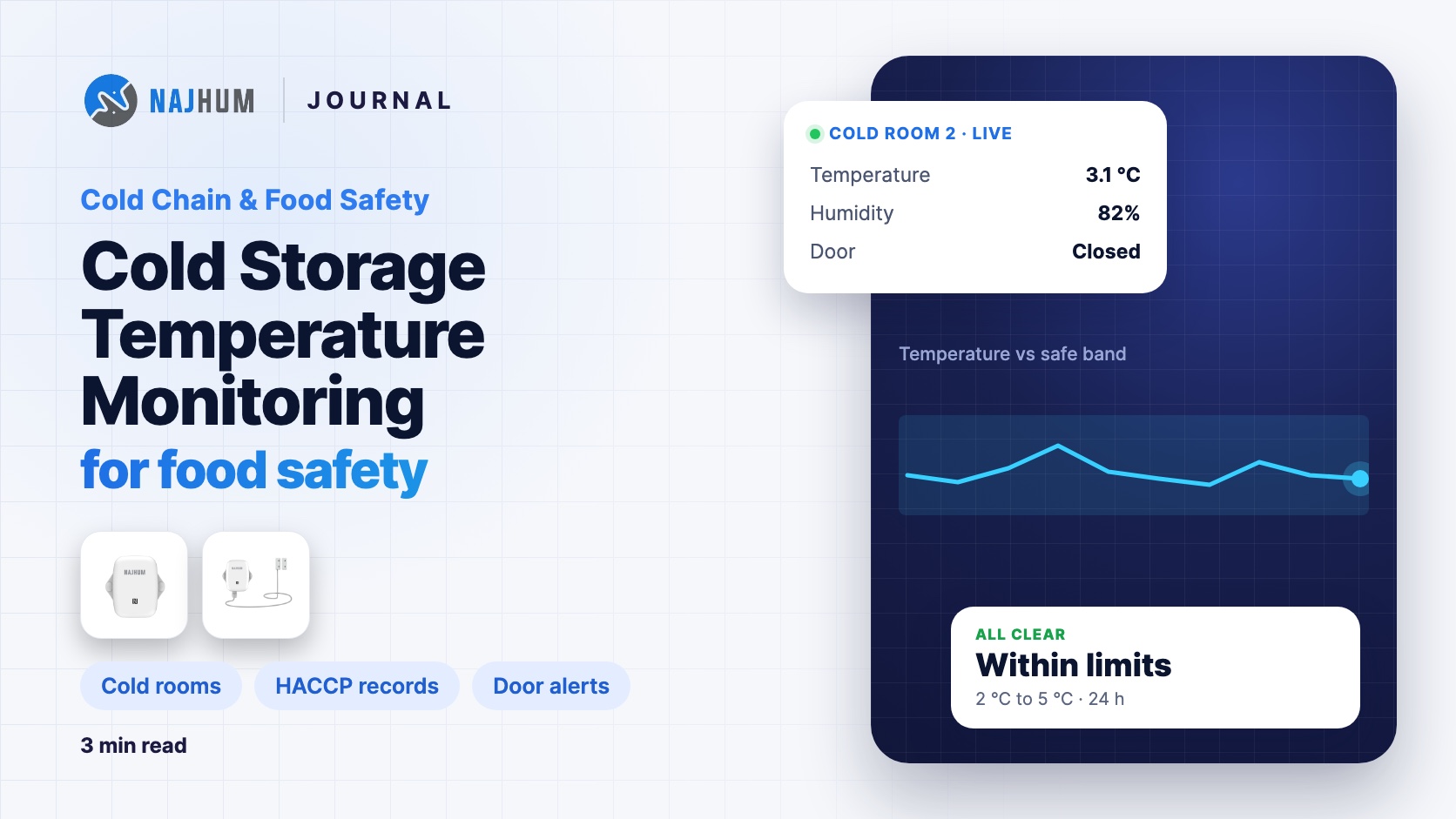
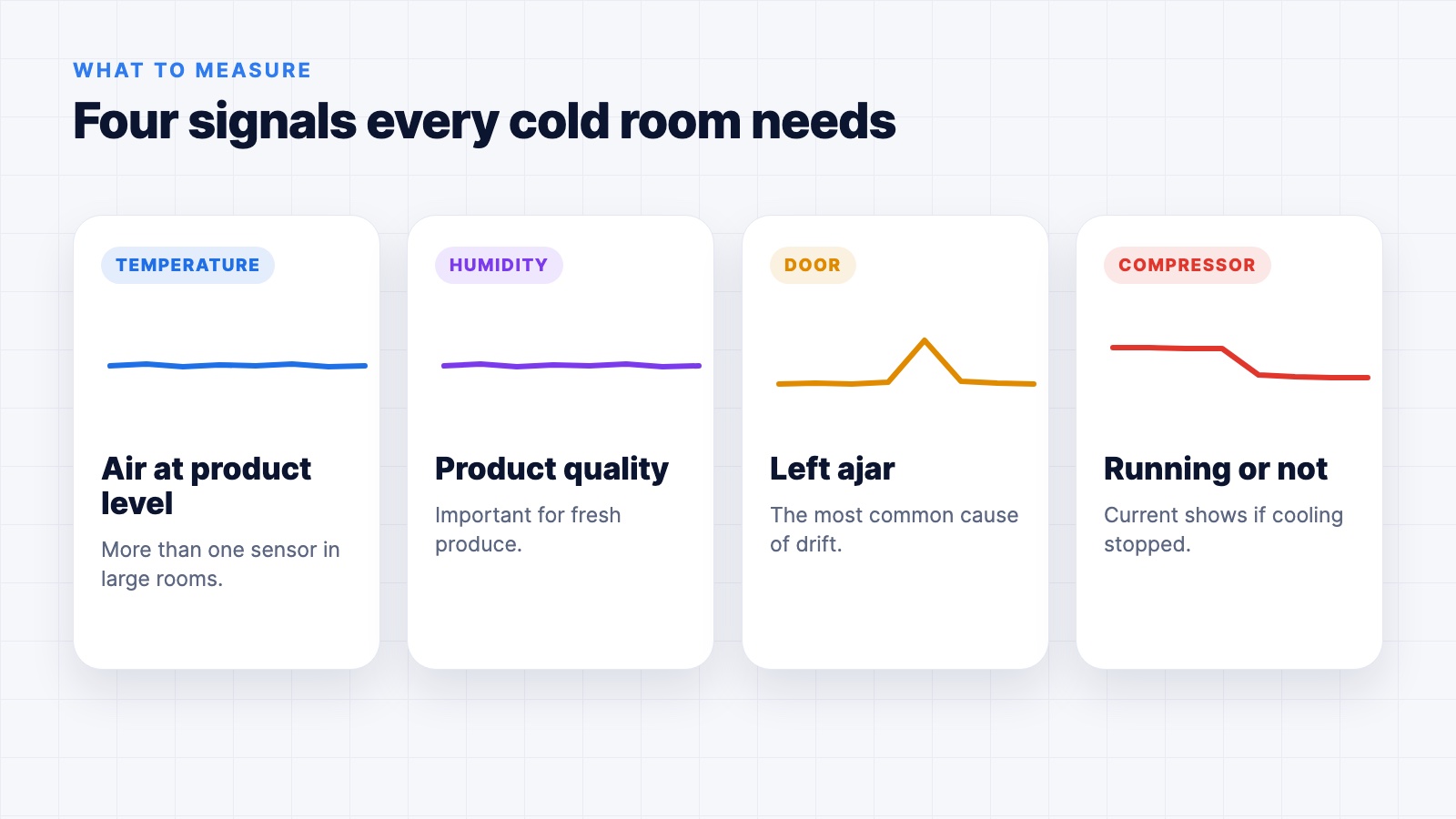
Air temperature at representative points, not just next to the evaporator. Large rooms often need more than one sensor.
Humidity, where product quality depends on it, such as fresh produce.
Door status, because a door left ajar is one of the most common causes of temperature drift.
Compressor or condensing unit current, to see whether the refrigeration is actually running when the temperature rises.
Alerts that people trust
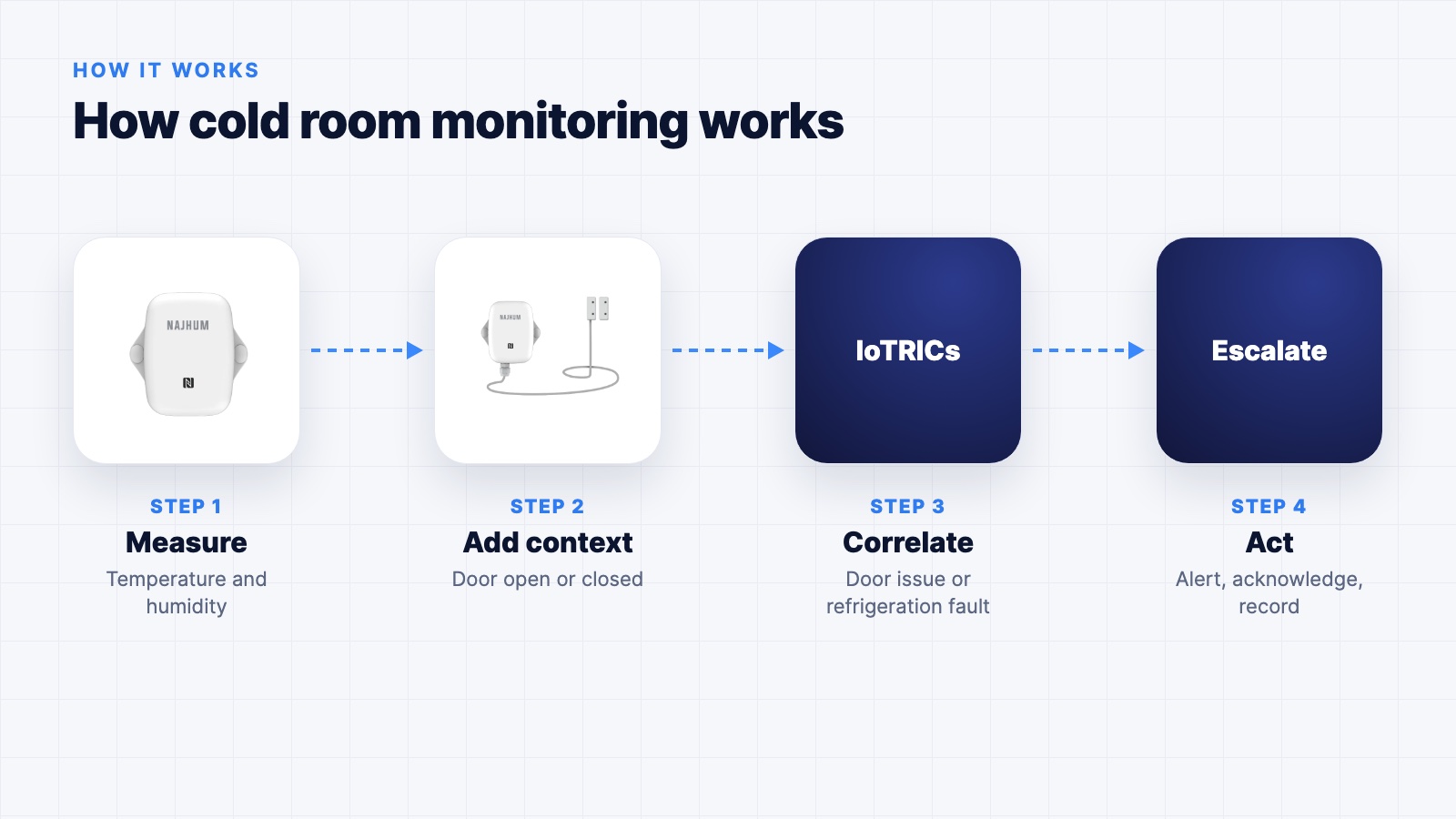
Every cold room sees short temperature rises during deliveries and defrost cycles. If each one triggers an alarm, staff stop paying attention. Good alerting uses a threshold plus a time delay, for example above 5 °C for more than 20 minutes, and treats door-open events differently from refrigeration failures.
Escalation matters too. If the first person does not acknowledge an alert, it should move to a supervisor and then to a manager. The IoTRICs platform records who acknowledged each alert and when, which becomes part of the corrective-action trail.
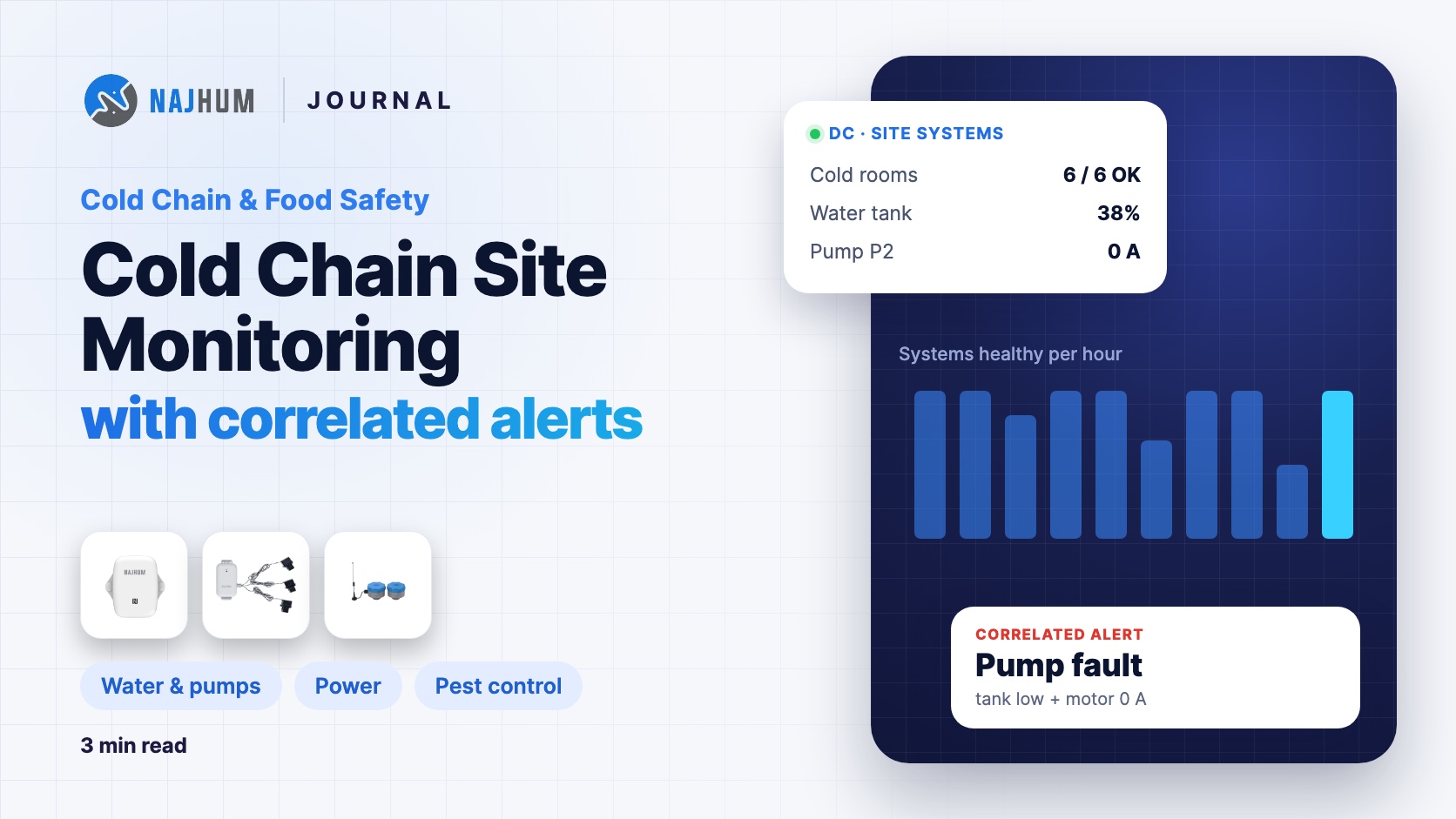
Above 5 °C for more than 20 minutes, with the door closed and the compressor at 0 A: call the contractor now.
Correlation turns alarms into diagnoses
A temperature alarm tells you there is a problem. A correlated alert tells you what kind. Rising temperature with the door open points to a handling issue. Rising temperature with the door closed and the compressor drawing no current points to a refrigeration fault, and the call should go to the maintenance contractor immediately.
Records ready for inspection
Continuous data produces a complete temperature history for every room, with alert events and responses attached. When an inspector or client auditor asks for records, they can be exported for the period requested rather than reconstructed from paper sheets. Review the regulatory requirements that apply to your emirate and activity with your food safety lead, and set the monitoring around them.
Why wireless matters in existing facilities
Battery-powered wireless sensors can be added to existing cold rooms without running new cables through insulated panels. Long-range wireless technology carries the signal out of metal-lined rooms to a gateway installed on site, which is often the difficult part for older Wi-Fi-based systems.
A note on very low temperatures
Standard battery-powered sensors are designed for chillers and typical freezers. Blast freezers running around −40 °C need a different approach, such as a wired probe with the electronics outside the room. A site survey identifies which rooms need which method.
Frequently asked questions
Can wireless sensors work inside metal cold rooms?
Yes. Long-range wireless carries the signal out of insulated rooms to a gateway on site.
What about blast freezers?
Rooms around −40 °C need a different method, such as a wired probe with electronics outside the room.
Are records accepted for inspections?
Continuous data can be exported for any period. Check the requirements for your emirate and activity with your food safety lead.
Protect your cold rooms around the clock.
Explore our cold storage monitoring solution, or discuss your project with our team.