In most UAE towers and villa communities, water reaches residents through a chain of ground tanks, transfer pumps and roof tanks. When any link in that chain fails, the first alert is usually a complaint: a resident with no water, a flooded plant room, or a guard who noticed water pouring from an overflow pipe at 3 a.m. Water tank level monitoring changes that order of events.
Key takeaways
A level sensor turns every tank into a live line on a chart, day and night.
Adding the pump's current explains why a level is falling, not just that it is.
Four alerts cover most problems: low, high, fast fall and overnight movement.
Start with the tanks that caused complaints last year, then scale.
Why manual tank checks fall short
Many buildings still rely on a technician climbing to the roof or opening a ground tank hatch once or twice a day. That routine has three weaknesses:
It is a snapshot. A tank that was full at 9 a.m. can be empty by 2 p.m. if a transfer pump trips.
It misses the night. Overflows and leaks often happen when consumption is low and nobody is watching.
It leaves no history. Without a record, you can't tell whether a tank fills slower than last month.
How water tank level monitoring works
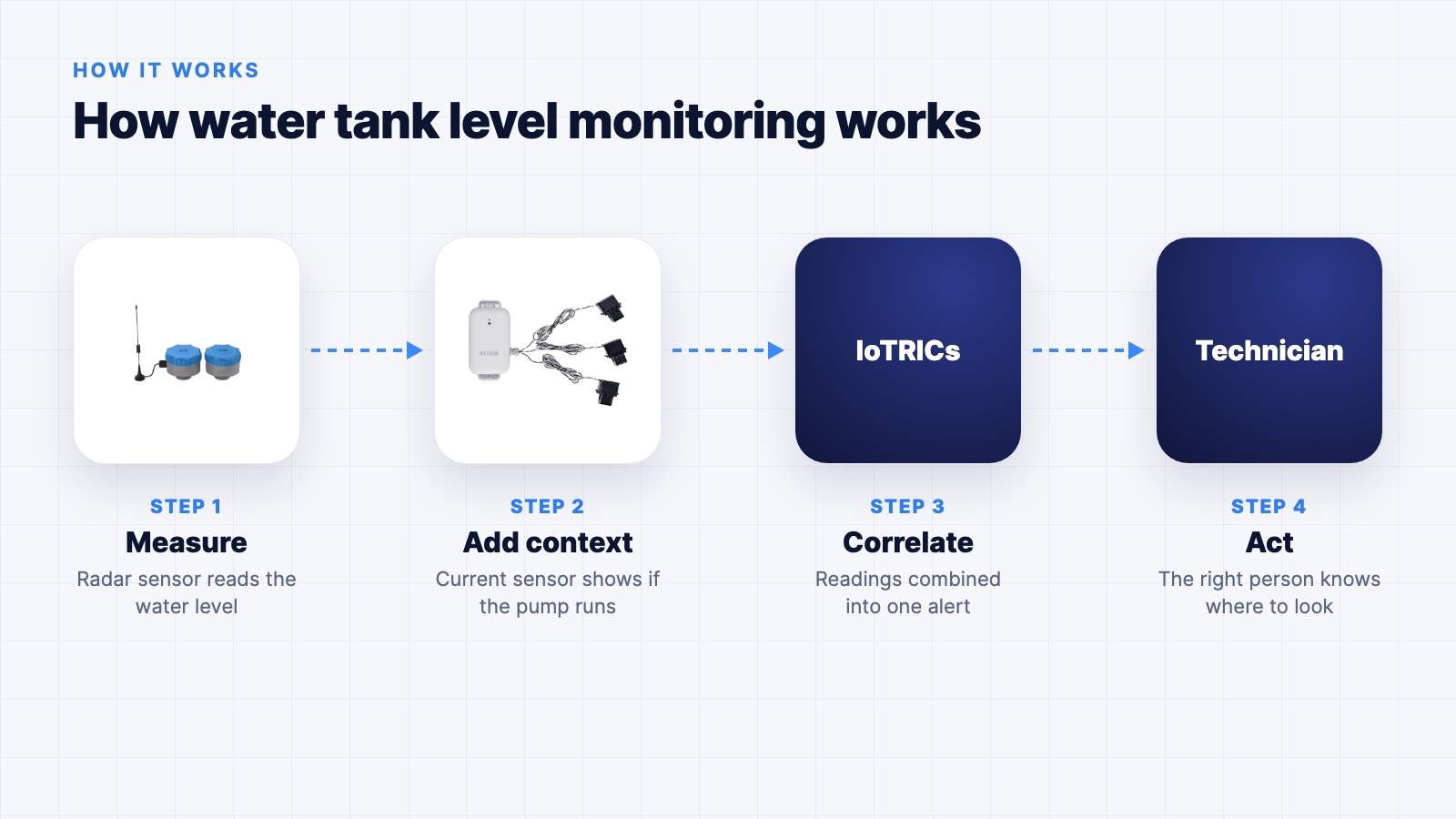
A non-contact radar or ultrasonic sensor mounted above the water surface measures the distance to the water and converts it into a level and a volume. Readings are sent wirelessly at regular intervals to a gateway on site, and from there to the platform.
What the level line tells you
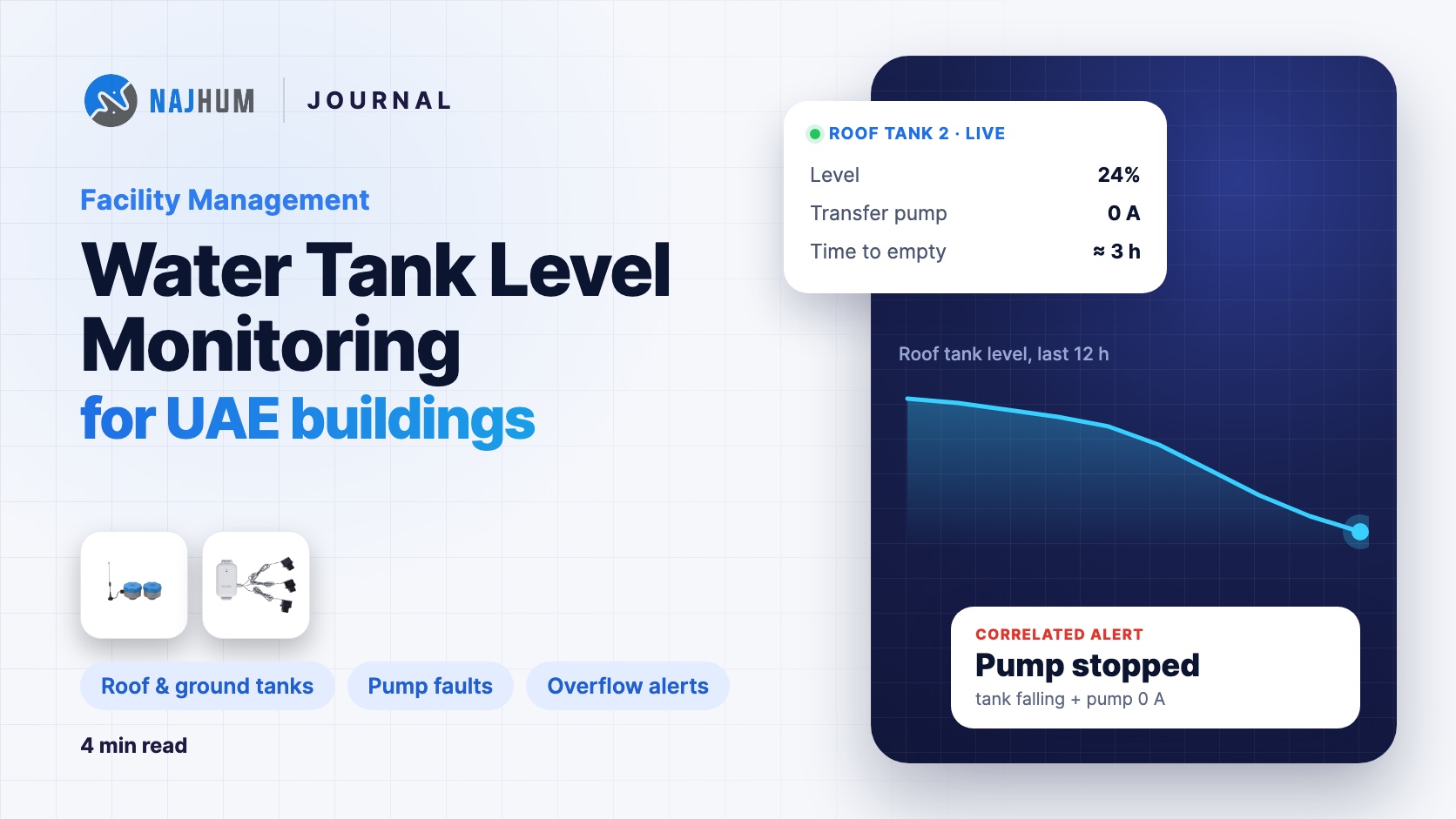
A steady fall overnight can point to a leak or a stuck float valve. A tank that stops filling while demand stays normal points to the supply side. A sudden rise above the high mark warns of an overflow before it reaches the drains.
Add the pump, and the alert explains itself
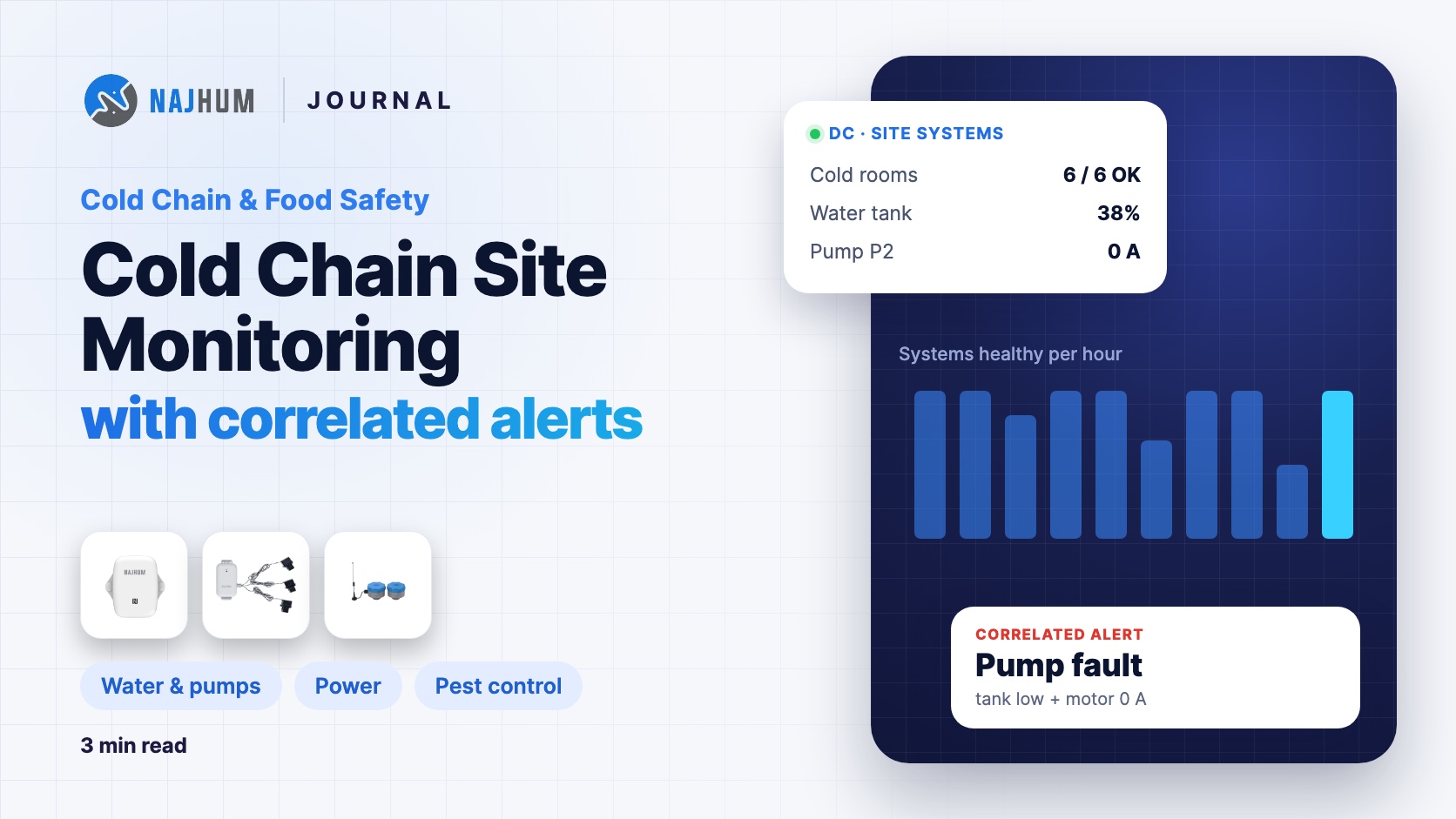
Pairing the level with a simple current sensor on the transfer pump says why. Tank falling and pump at zero amps: the pump has tripped. Tank falling and pump running normally: look at the suction side, a closed valve or an empty ground tank.
“Roof tank 2 below 25% and transfer pump not running.” One alert, with the likely cause, instead of three separate alarms.
Four alerts every water tank should have
Good alerts start with a conversation with the people who run the building. These four cover most situations:
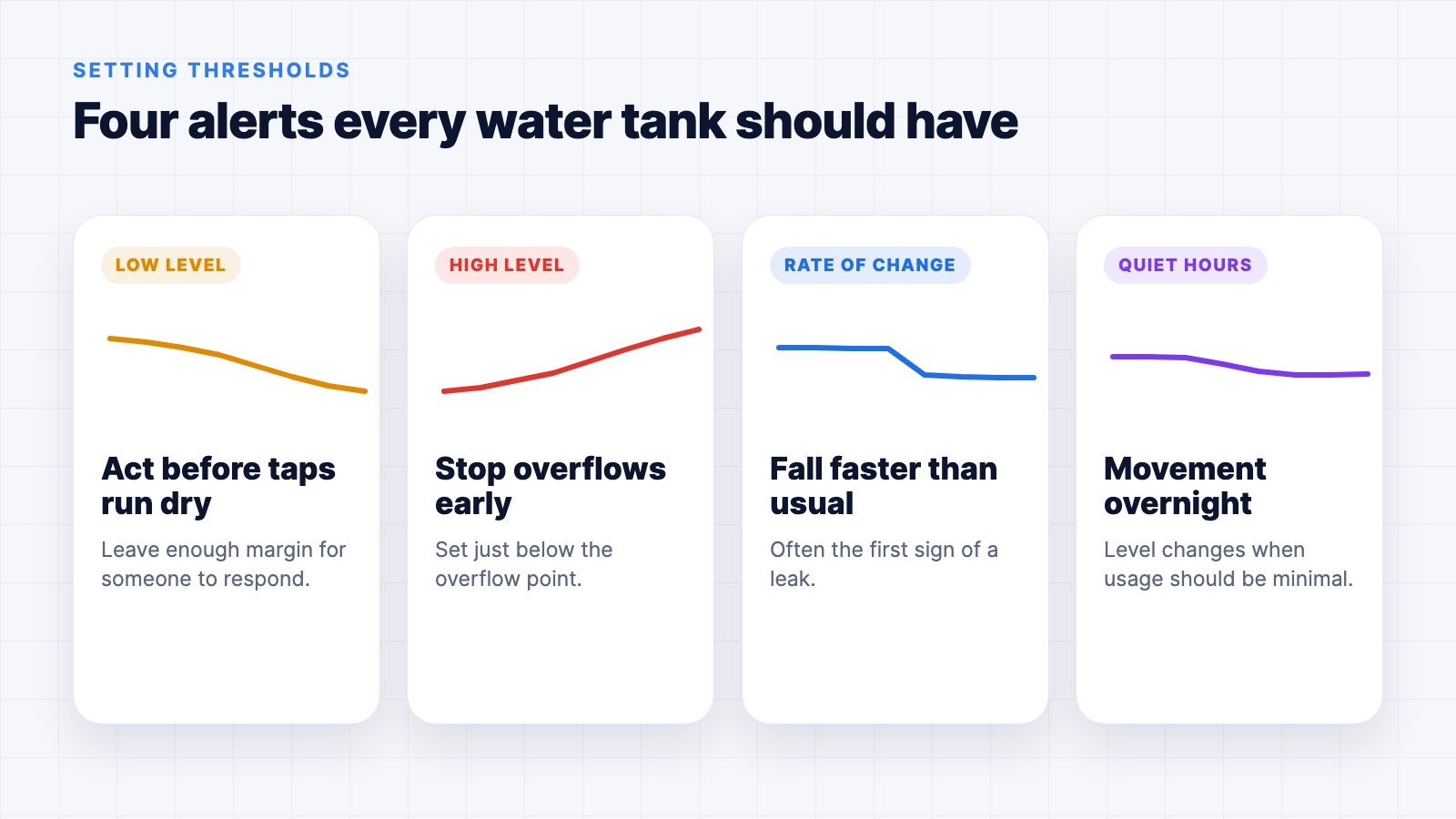
Low level: with enough margin for someone to respond before supply is lost.
High level: just below the overflow, so the team can act before water is wasted.
Rate of change: a fall faster than normal consumption is often the earliest sign of a leak.
Quiet hours: level movement overnight, when usage should be minimal.
Water conservation is part of the case
Overflows and hidden leaks waste water the building pays for. In a region where much of the water comes from desalination, reducing that waste supports both the operating budget and sustainability goals. A level history also helps when reviewing consumption with owners or residents' associations.
Where to start
List the tanks that caused complaints or overflows in the past year.
Add level sensing to those tanks and current sensing to the pumps that feed them.
Agree thresholds and who receives each alert.
Review after a few weeks and adjust, then extend to other blocks or buildings.
Frequently asked questions
Can level sensors be added to existing tanks?
Yes. Non-contact sensors mount above the water through the tank cover, and battery-powered wireless models need no new cabling.
Do sensors work in UAE summer heat?
Sensors are selected for the site after a survey, including temperature and exposure on roofs, so they suit the conditions they will face.
Who receives the alerts?
Usually the on-shift technician first, with escalation to a supervisor if nobody acknowledges the alert in time.
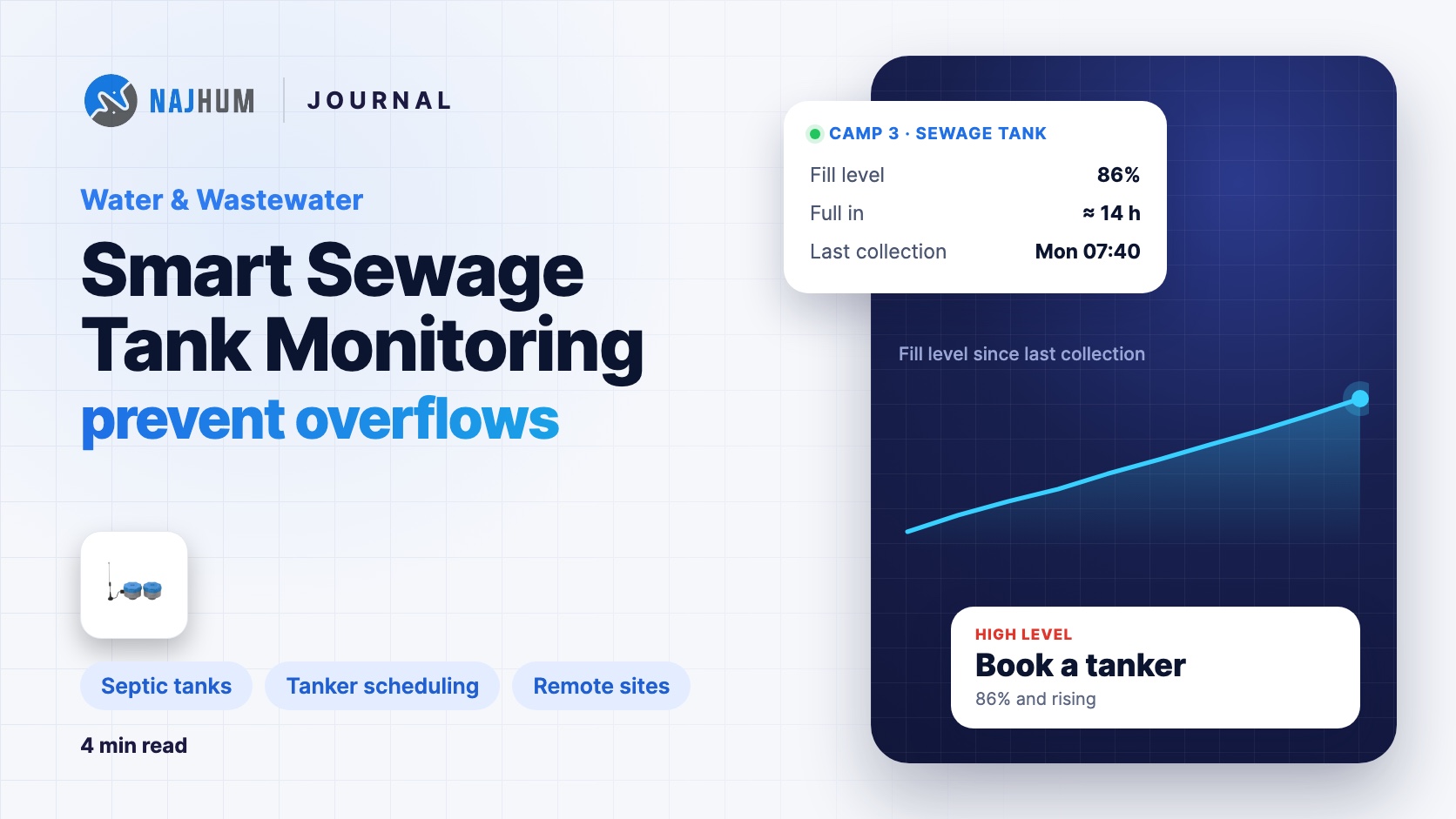
Plan your water tank monitoring with Najhum.
We design, install and run tank and pump monitoring as part of our facility management and real estate solutions on IoTRICs. Discuss your project.