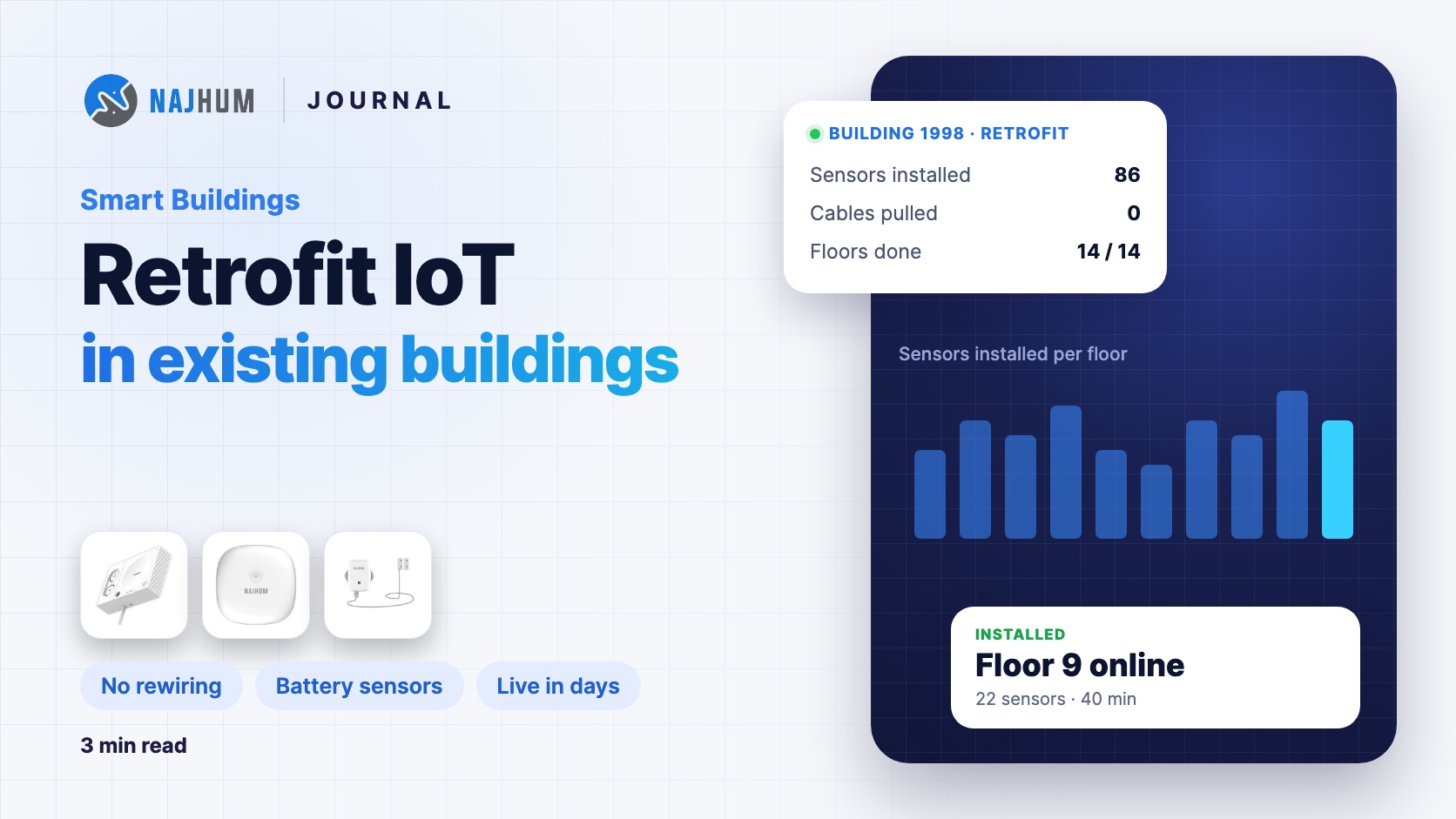
New flagship towers often come with sophisticated building management systems. The majority of buildings in the UAE, though, are older offices, residential blocks, hotels and warehouses where monitoring is limited to a few alarms and daily inspections. Replacing those systems is rarely practical. Retrofitting wireless monitoring is.
Key takeaways
Most buildings in the region predate smart monitoring.
Battery wireless sensors avoid opening ceilings and walls.
Water, energy, comfort and equipment health can all be added.
Retrofits can work alongside an existing BMS.
Why retrofits used to be hard
Traditional monitoring needs cables from every sensor to a controller. In an occupied building, that means opening ceilings, drilling through fire-rated walls and working around tenants. The cost and disruption often outweighed the benefit.
What changed
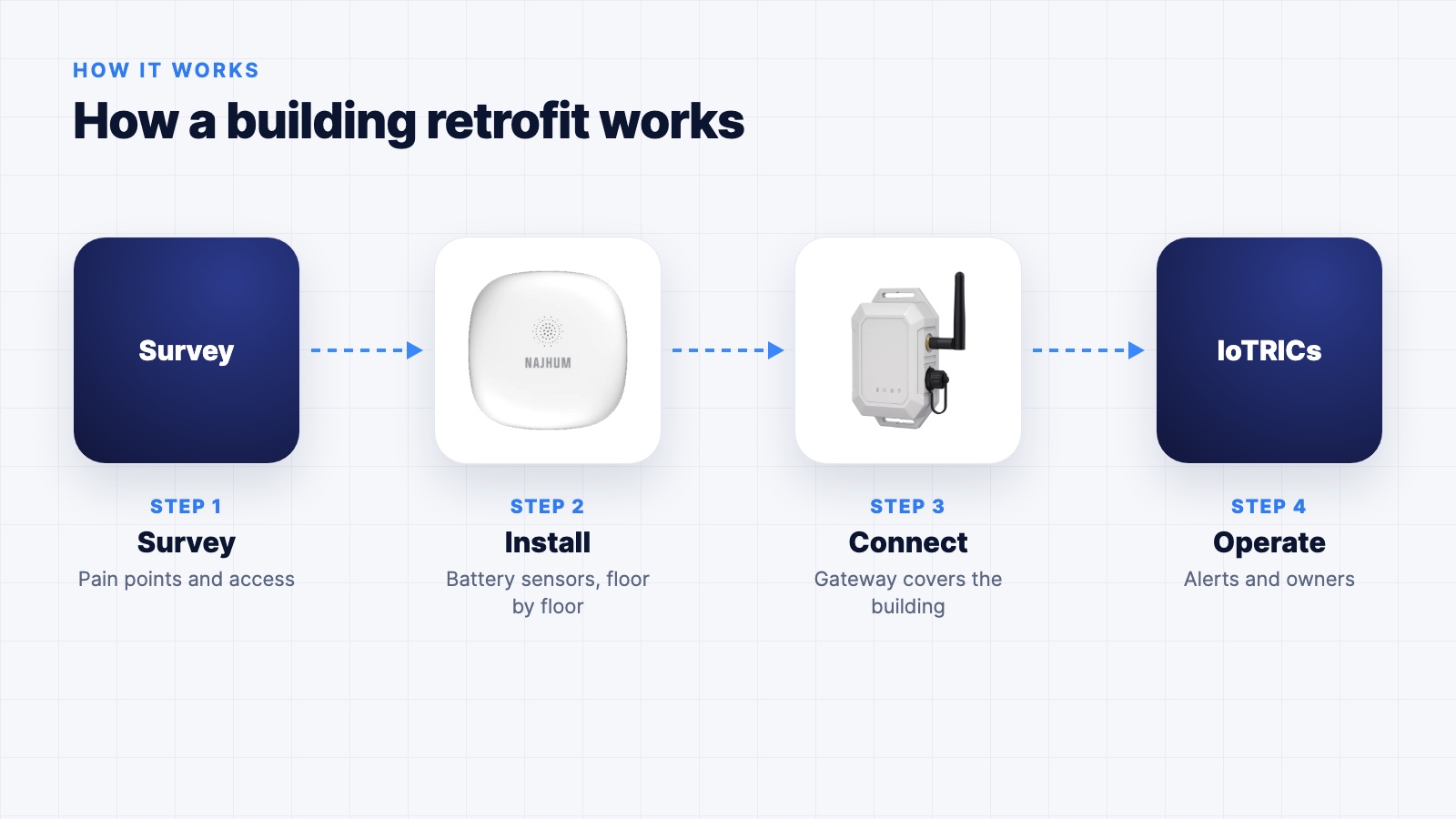
Battery-powered wireless sensors with long-range radio have removed most of that work. A sensor can be fixed to a wall or pipe in minutes, runs for years on its battery, and sends data to a gateway that may cover the entire building. Installation can happen floor by floor, during working hours, without shutting down services.
Installation can happen floor by floor, during working hours, without shutting down services.
What you can add without rewiring
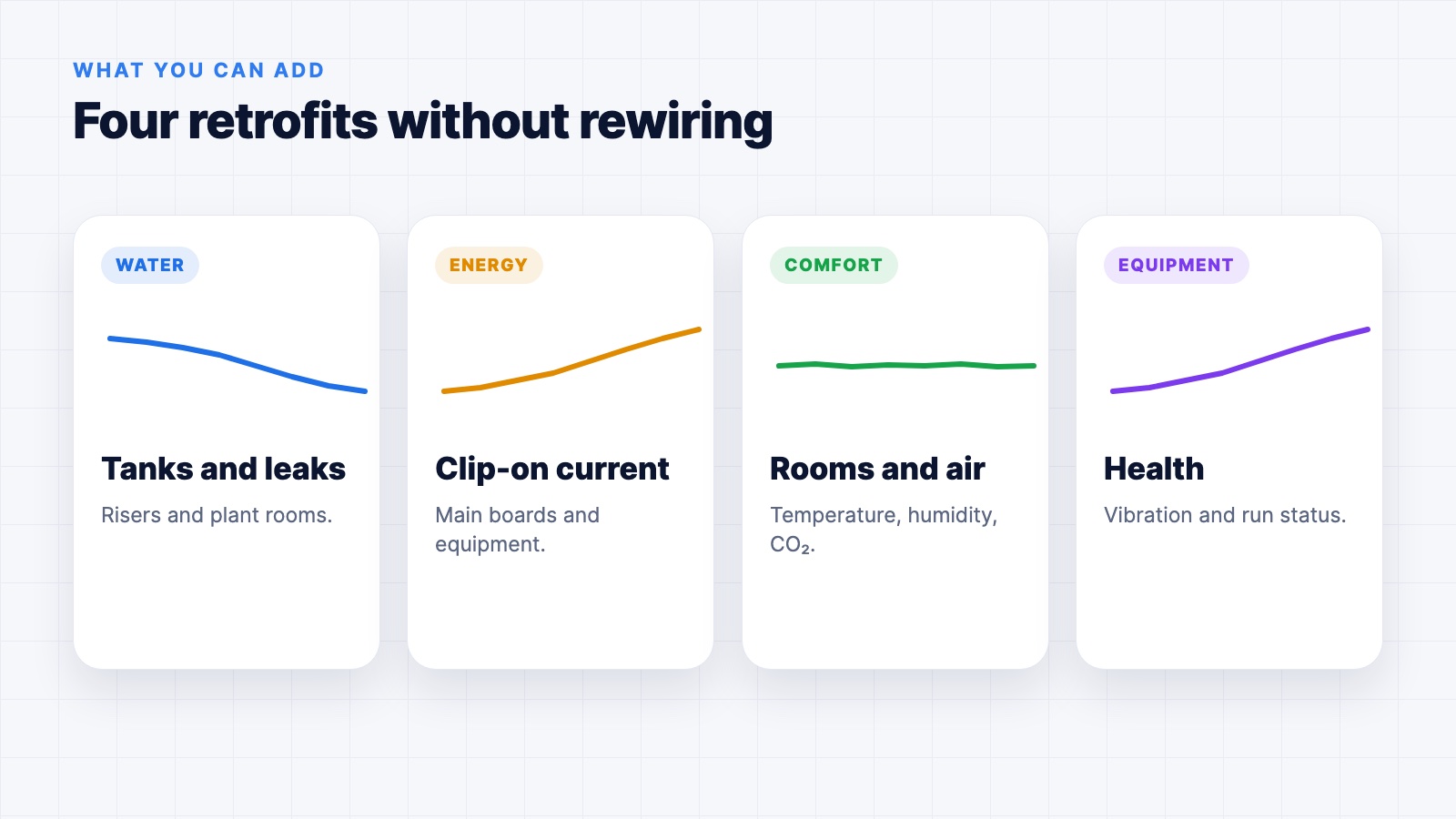
Water: tank levels, leak detection in risers and plant rooms, valve control.
Energy: clip-on current sensors on main boards and key equipment.
Comfort: temperature, humidity and CO₂ in rooms and corridors.
Equipment health: vibration on pumps and fans; run status of chillers and AHUs.
Security and operations: door status, occupancy, washroom odour and bin levels.
Working alongside an existing BMS
A retrofit does not have to replace what is there. Where a BMS exists, wireless sensors can fill the gaps it does not cover, and the platform can bring both views together. Controllers can also connect to existing equipment, such as VRF systems or RS485 meters, so their data appears alongside new sensors.
Start with the pain points
Ask the facilities team which issues consume the most time or cause the most complaints. Common starting points are water supply interruptions, leaks, hot or stuffy rooms and equipment that fails without warning. Solving one of these well builds support for the next phase.
Plan for operation, not just installation
Sensors need batteries replaced eventually, gateways need to stay online, and alerts need owners. A retrofit should include a clear plan for who looks after the system, which is why many owners prefer a service model where the provider maintains it.
Frequently asked questions
Will a retrofit replace our BMS?
No. It fills the gaps and brings both views together on one platform.
How disruptive is installation?
Sensors fix in minutes and need no cabling, so work happens around occupants.
Who maintains the system?
Plan it from day one. Many owners choose a service model where the provider looks after it.
Make your existing building smart.
Explore our facility management and real estate solutions, or discuss your building with Najhum.