Pumps are everywhere in a building or industrial site: water transfer, booster sets, chilled water, drainage and sewage lifting. They usually sit in plant rooms that are visited once a day at most. When one stops, the first sign is often a symptom elsewhere, such as low water pressure, a rising tank or a warm building.
A current sensor on the pump motor supply is a simple way to see what the pump is doing in real time.
Key takeaways
A clip-on sensor shows whether a pump is running, struggling or dry.
0 A when it should run means a trip or supply problem.
Run hours check duty and standby rotation.
Pair current with the tank or pressure the pump serves.
How a current sensor works
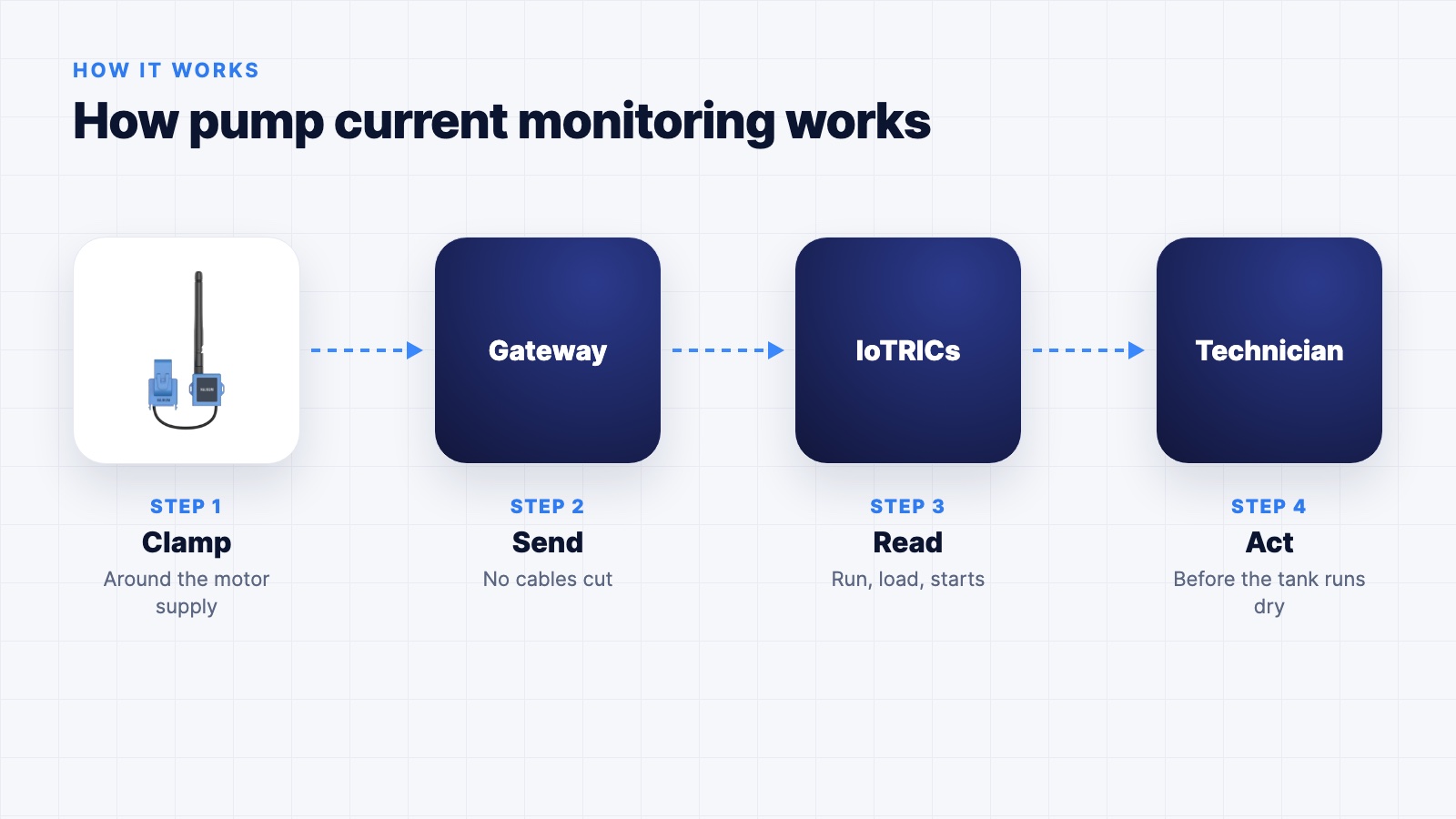
A current transformer clamps around a conductor feeding the motor. It measures the current flowing without cutting any cables, and a wireless transmitter sends the reading to the platform. Installation in an existing panel is usually quick, with no need to replace starters or controls.
What the readings mean
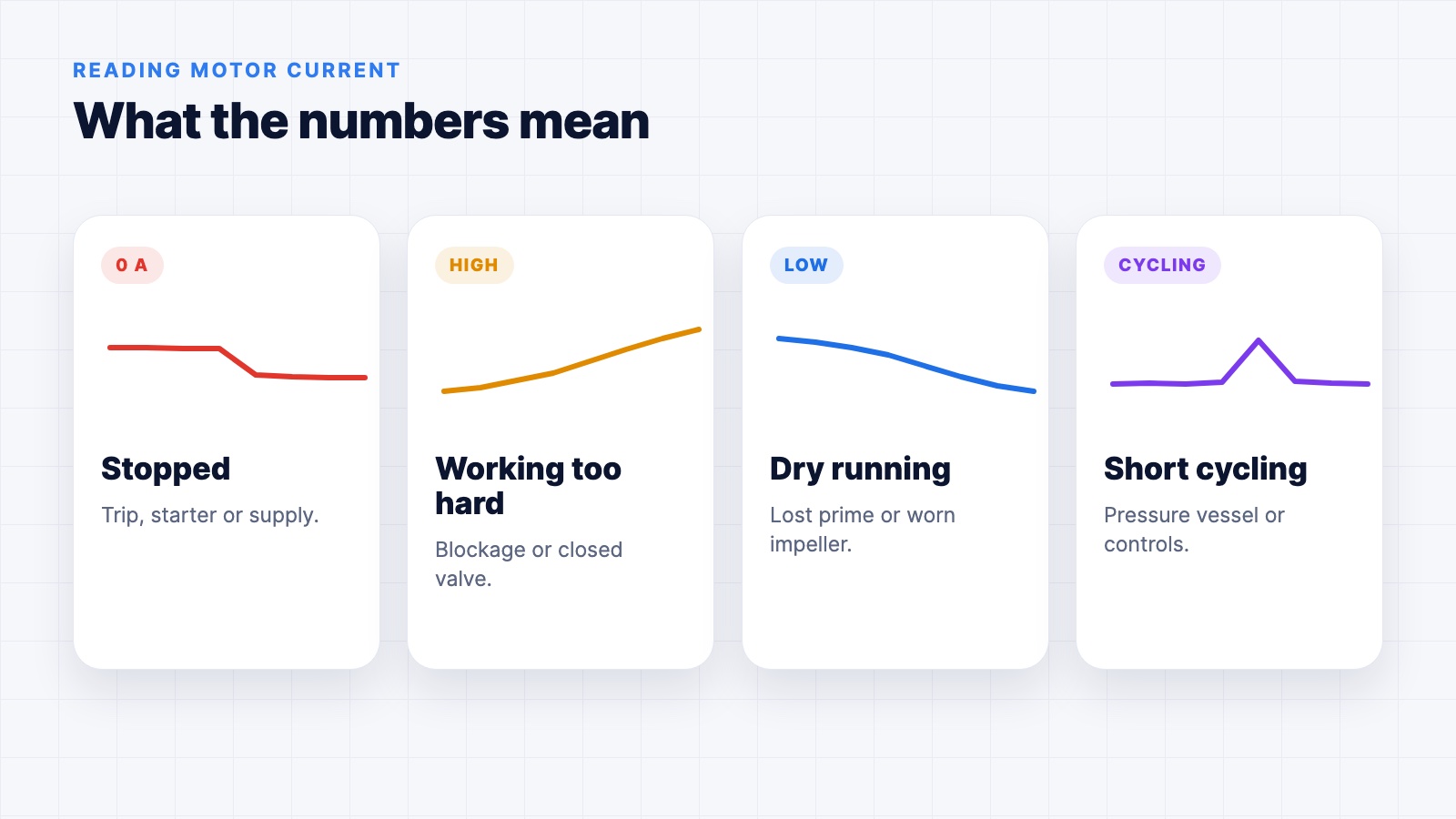
0 A when it should be running: the pump has stopped. A tripped overload, failed starter or lost supply.
Normal current: the motor is running at its usual load.
Higher than usual: the pump may be working against a blockage, a closed valve or mechanical wear.
Lower than usual: it may be running dry, have lost prime or have a worn impeller.
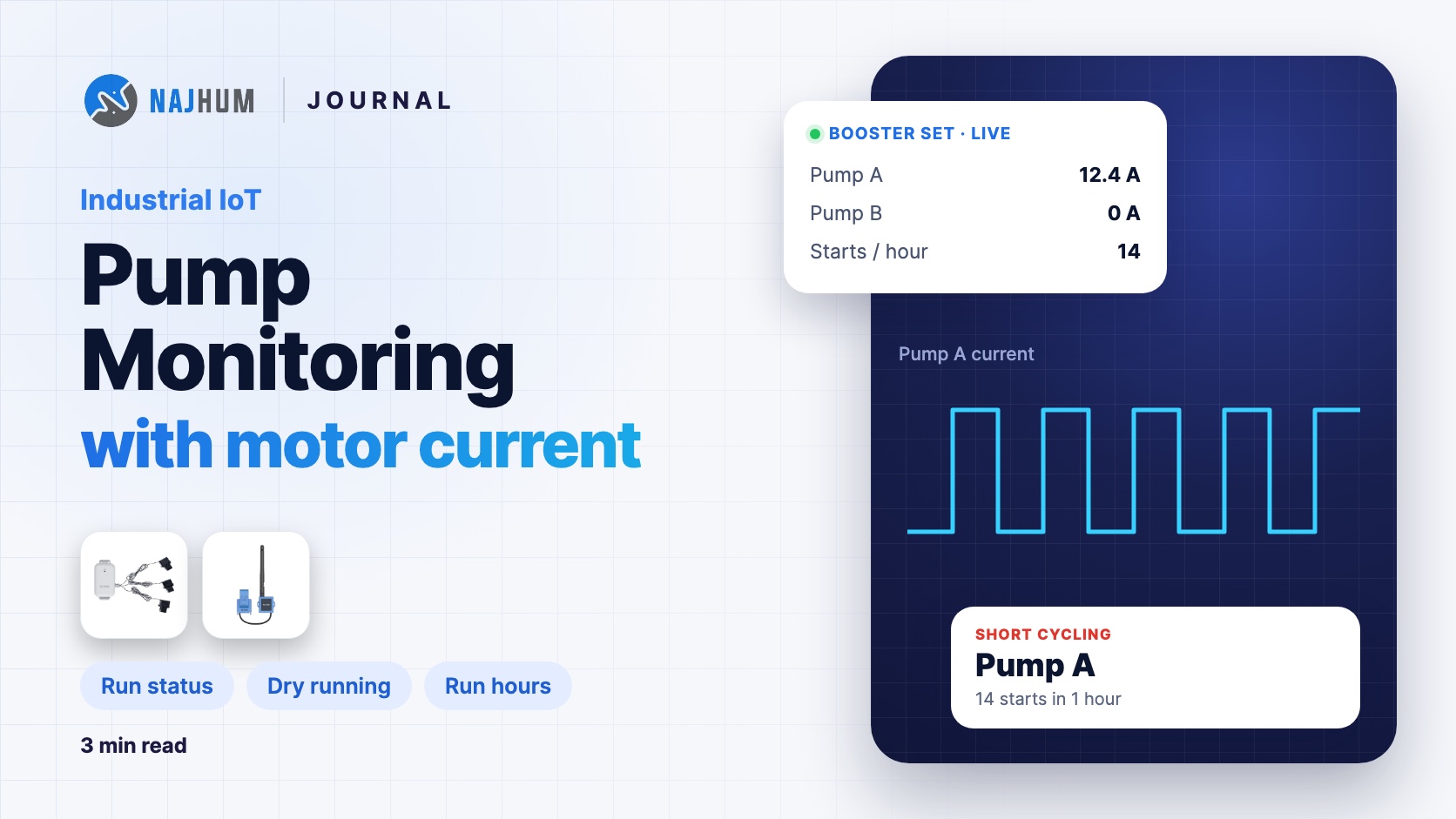
Frequent starts and stops: short cycling, often caused by a pressure vessel or control problem.
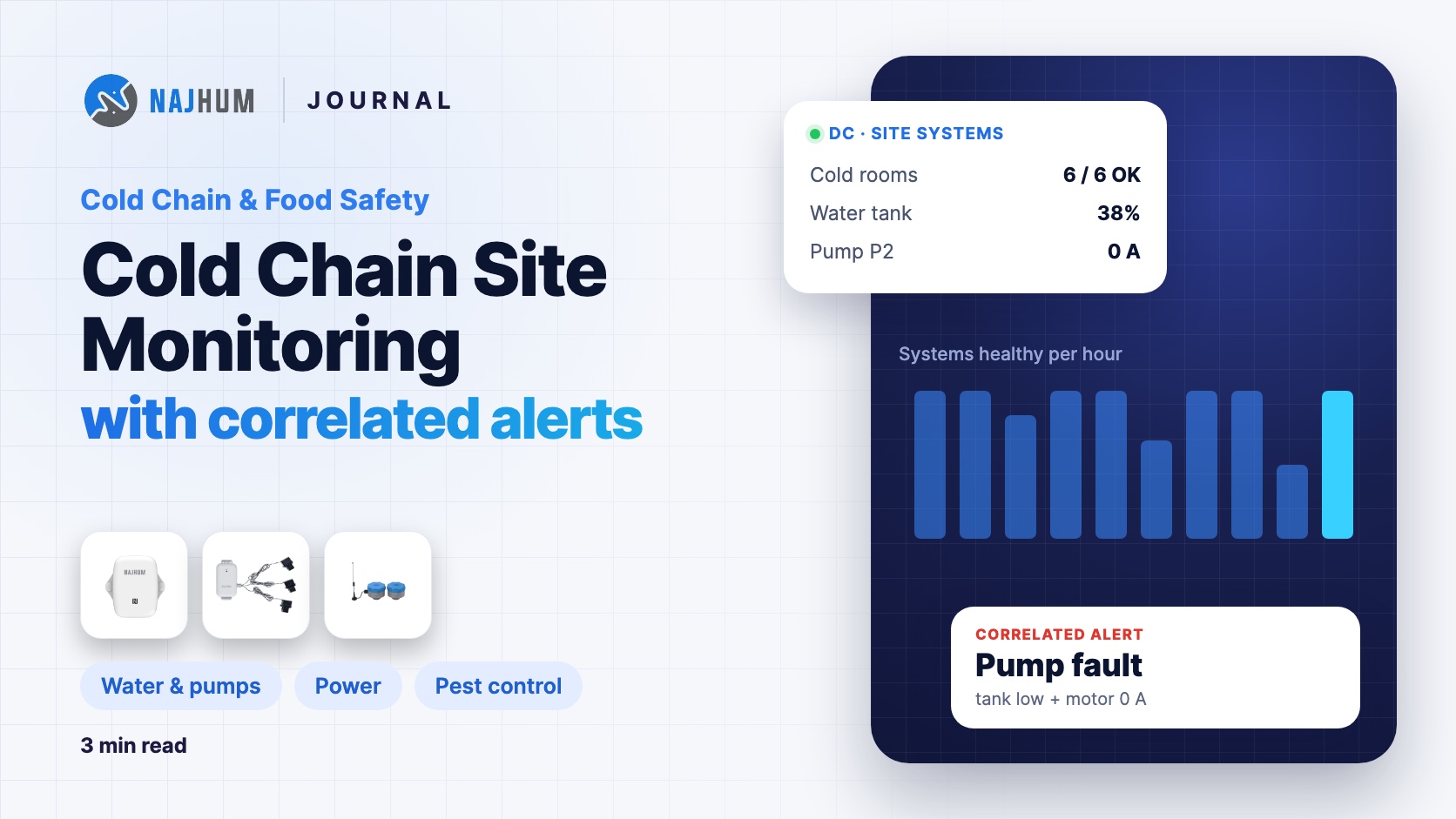
Tank falling and pump at 0 A: the pump has stopped. Tank falling and pump running: look for the leak.
Run hours for maintenance planning
Current data also gives accurate run hours for each pump. Duty and standby pumps should share the load; if one runs far more than the other, rotation is not working. Run hours also support maintenance based on actual use rather than calendar time.
Better with context
Pump current becomes much more powerful when paired with what the pump serves. With a tank level sensor, the IoTRICs platform can raise alerts such as “Tank falling, pump at 0 A” (pump stopped) or “Tank falling, pump running” (look for a leak or valve). With a vibration sensor, rising current and rising vibration together point to mechanical trouble.
Energy insight too
Because current relates to power, these readings also show how much energy each pump uses. Pumps running unnecessarily overnight or at weekends become visible, which is a quick win for energy reduction.
Where to start
List the pumps whose failure affects residents, guests or production most, and add current sensing to those first. Pair them with the level, pressure or temperature they control.
Frequently asked questions
Does installing a current sensor need a shutdown?
Usually not. The clamp fits around a conductor without cutting cables or replacing starters.
Can it show energy use?
Yes. Current relates to power, so pumps running needlessly at night become visible.
Which pumps first?
Those whose failure affects residents, guests or production most.
Know what every pump is doing.
Pump monitoring is part of our facility management and cold chain solutions. Discuss your project with Najhum.