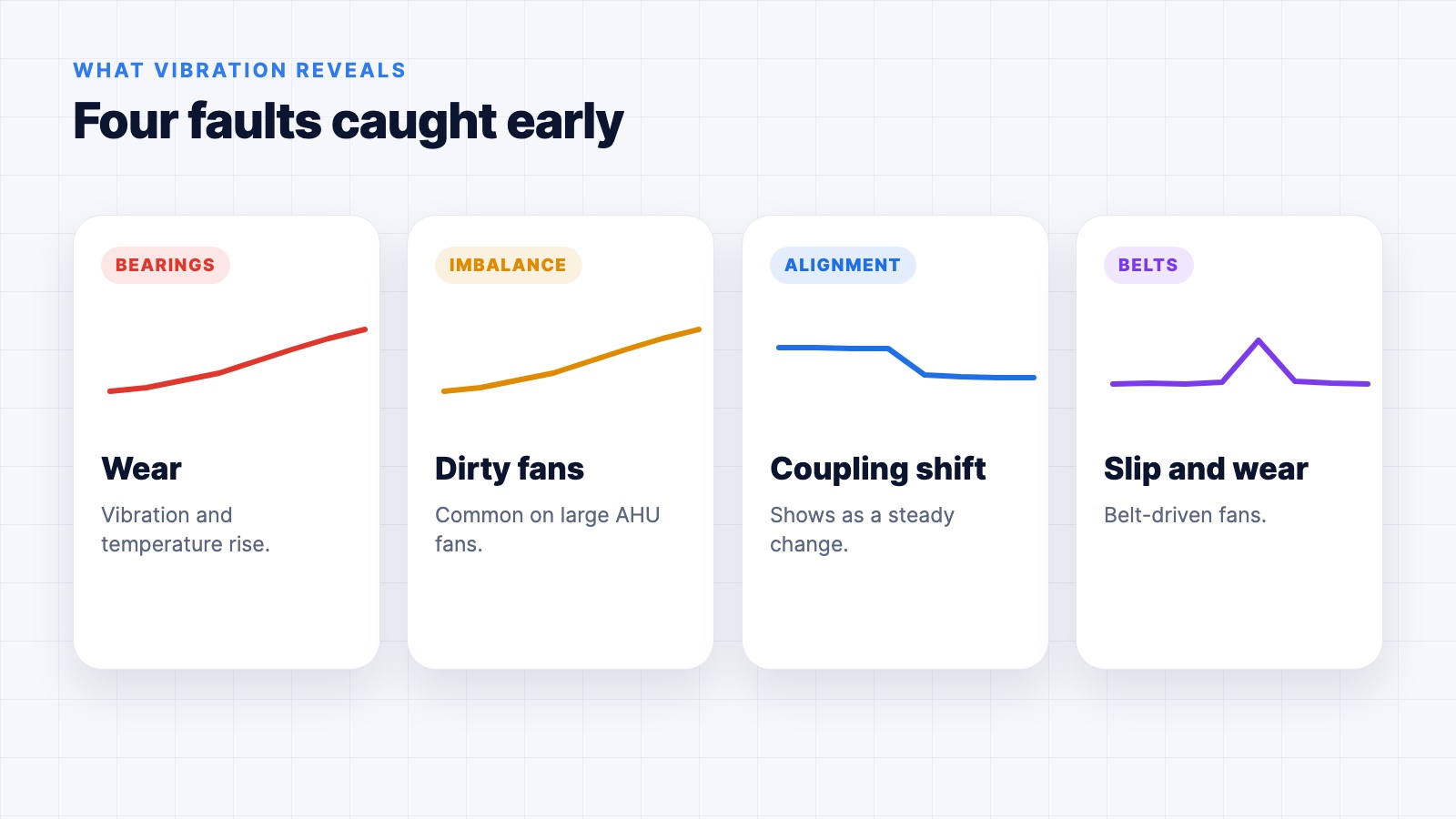
Most rotating equipment gives warning before it fails. Bearings start to wear, a fan picks up dirt and goes out of balance, a coupling shifts out of alignment. These changes show up as vibration long before the machine stops. The challenge is noticing them in time.
Key takeaways
Most rotating equipment warns before it fails, as vibration.
Wireless sensors make continuous monitoring affordable.
Start with critical pumps, large fans and compressors.
Watch each machine's trend, not one fixed number.
From run-to-failure to condition-based
Many facilities run equipment until it fails or service it on a fixed calendar. Run-to-failure leads to unplanned downtime and secondary damage. Calendar maintenance replaces parts that still had life left, and still misses failures that happen between visits. Condition-based maintenance services equipment when its condition says it needs attention.
Why wireless sensors change the economics
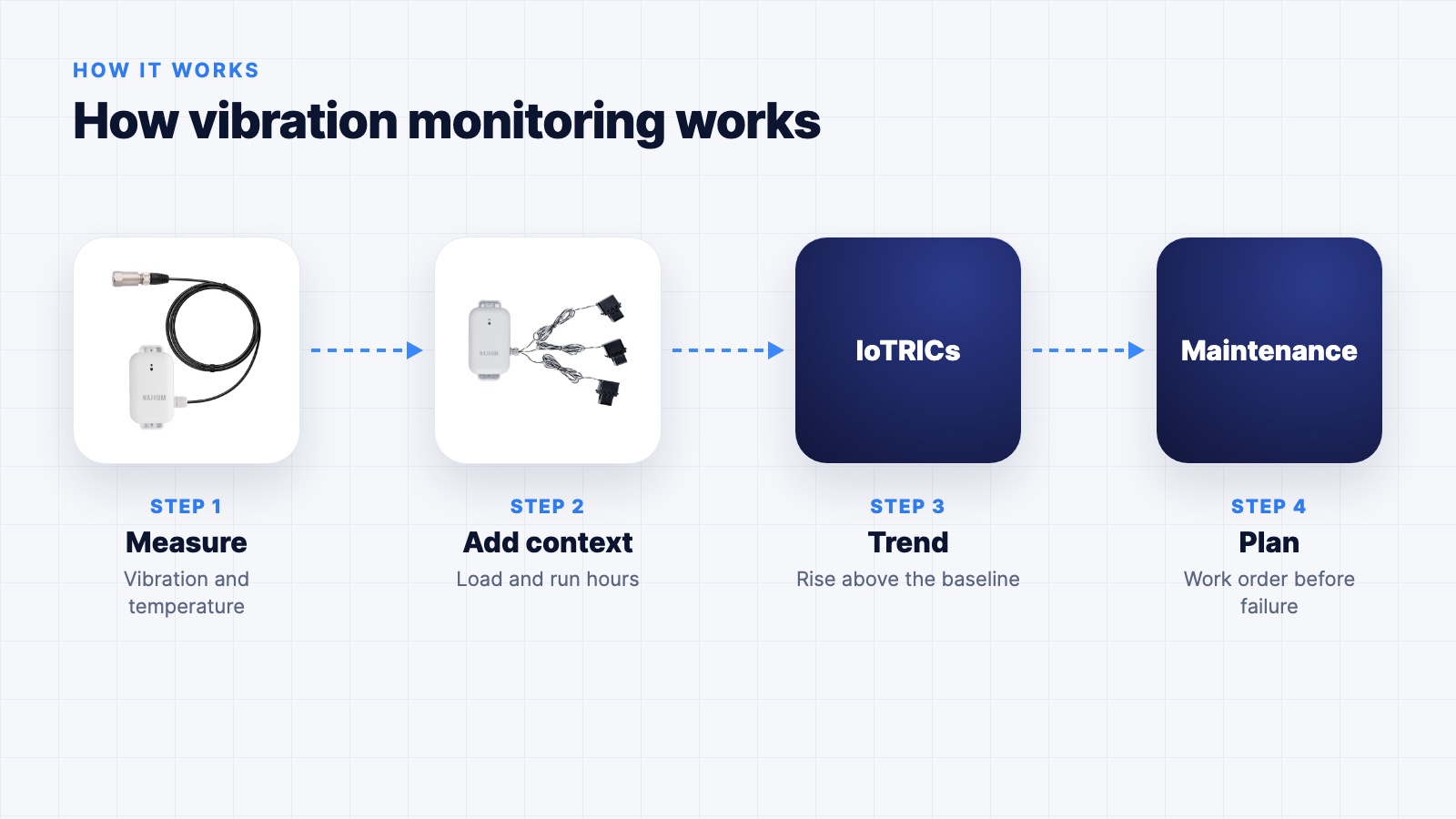
Traditional vibration analysis means a specialist visiting with a handheld analyser every few weeks or months. Wired online systems are effective but expensive to install across many machines. Battery-powered wireless vibration sensors can be mounted on a pump or motor in minutes and report readings throughout the day, which makes continuous monitoring practical for equipment that never justified it before.
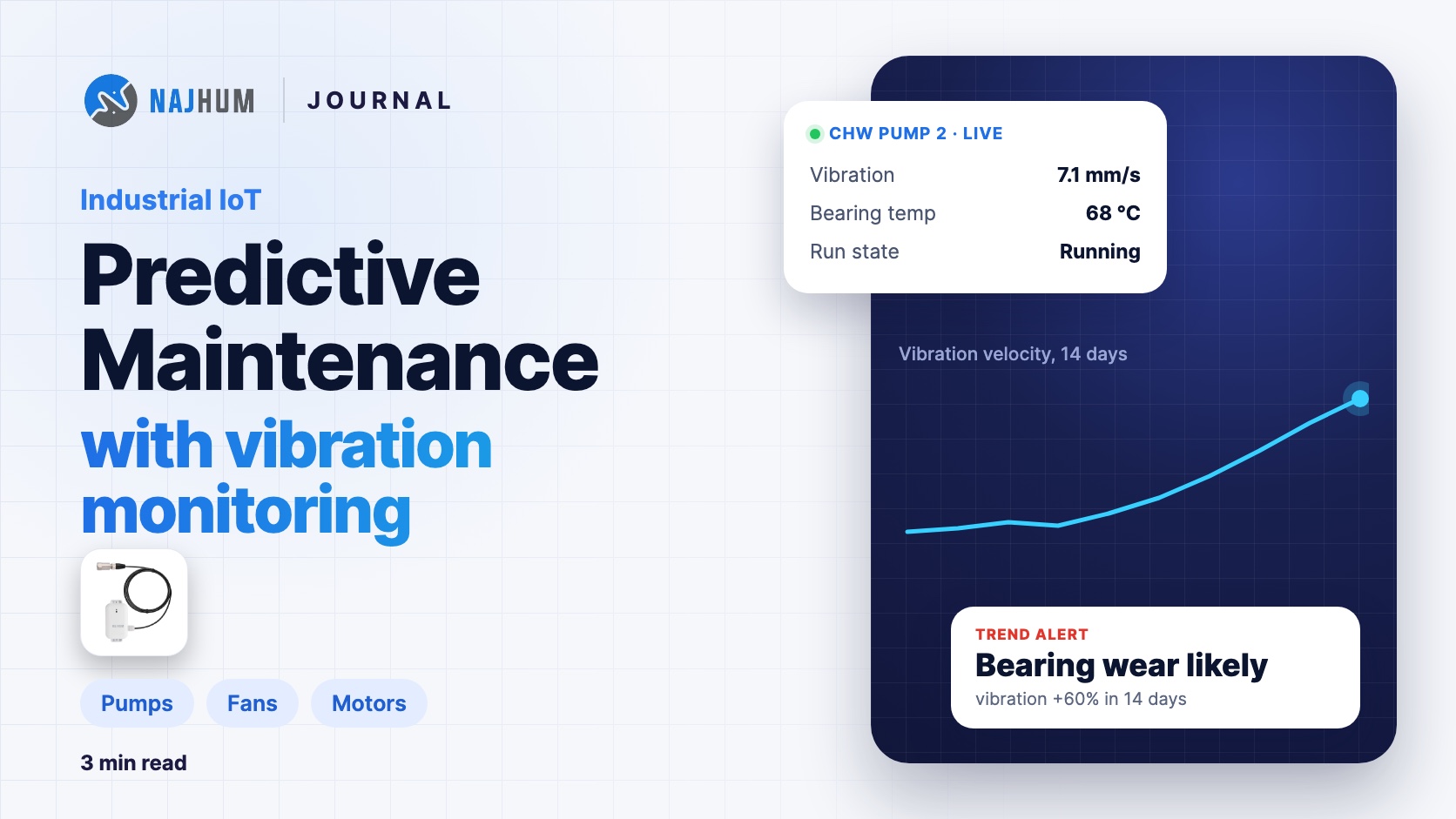
Vibration +60% in 14 days: plan the bearing change, don't wait for the failure.
What to monitor first
Critical pumps: chilled water, condenser water, domestic water transfer and fire pumps.
AHU and exhaust fans: large belt-driven fans are prone to imbalance and belt issues.
Compressors and process motors in industrial and cold chain sites.
Start with equipment where failure causes the biggest disruption or has no standby.
Reading the trend, not the number
For a facilities team, the most useful view is the trend. Each machine has its own normal level. Alerts based on a sustained rise above that baseline are more meaningful than one fixed number for every machine. Temperature readings from the same sensor add context, since bearing problems often raise surface temperature as well.
Combine with current and run status
Vibration is clearer when you know whether the machine was running and how hard. A current sensor on the motor supply shows load and run hours. On the IoTRICs platform, vibration, temperature and current sit together, so a rising vibration trend can be checked against changes in load before a technician is sent.
Make it part of the maintenance routine
Feed alerts into the existing work order process, and record what the technician found. Over time, this builds a picture of which alerts led to real findings, which helps refine thresholds and builds confidence across the team.
Frequently asked questions
Do we need a vibration specialist?
For the first level, no. Trend alerts flag machines that need a closer look by a specialist.
How long does installation take?
A wireless sensor mounts on a pump or motor in minutes.
Which machines should we start with?
Those whose failure causes the most disruption or have no standby.
Fix machines before they stop.
Explore condition monitoring within our facility management solution, or discuss your project.