Supermarket managers make dozens of decisions each week that depend on how many shoppers will walk through the door: how many cashiers to roster, when to restock shelves, when to schedule cleaning, and whether a promotion actually brought people in. Without footfall data, those decisions rely on experience and sales receipts, which only count people who bought something.
Key takeaways
Sales receipts count baskets, not visitors.
AI counters count people on the device and send counts, not video.
Footfall drives shift planning, till opening and promotion reviews.
A year of data shows Ramadan, Eid and salary-date patterns.
Why sales data is not footfall
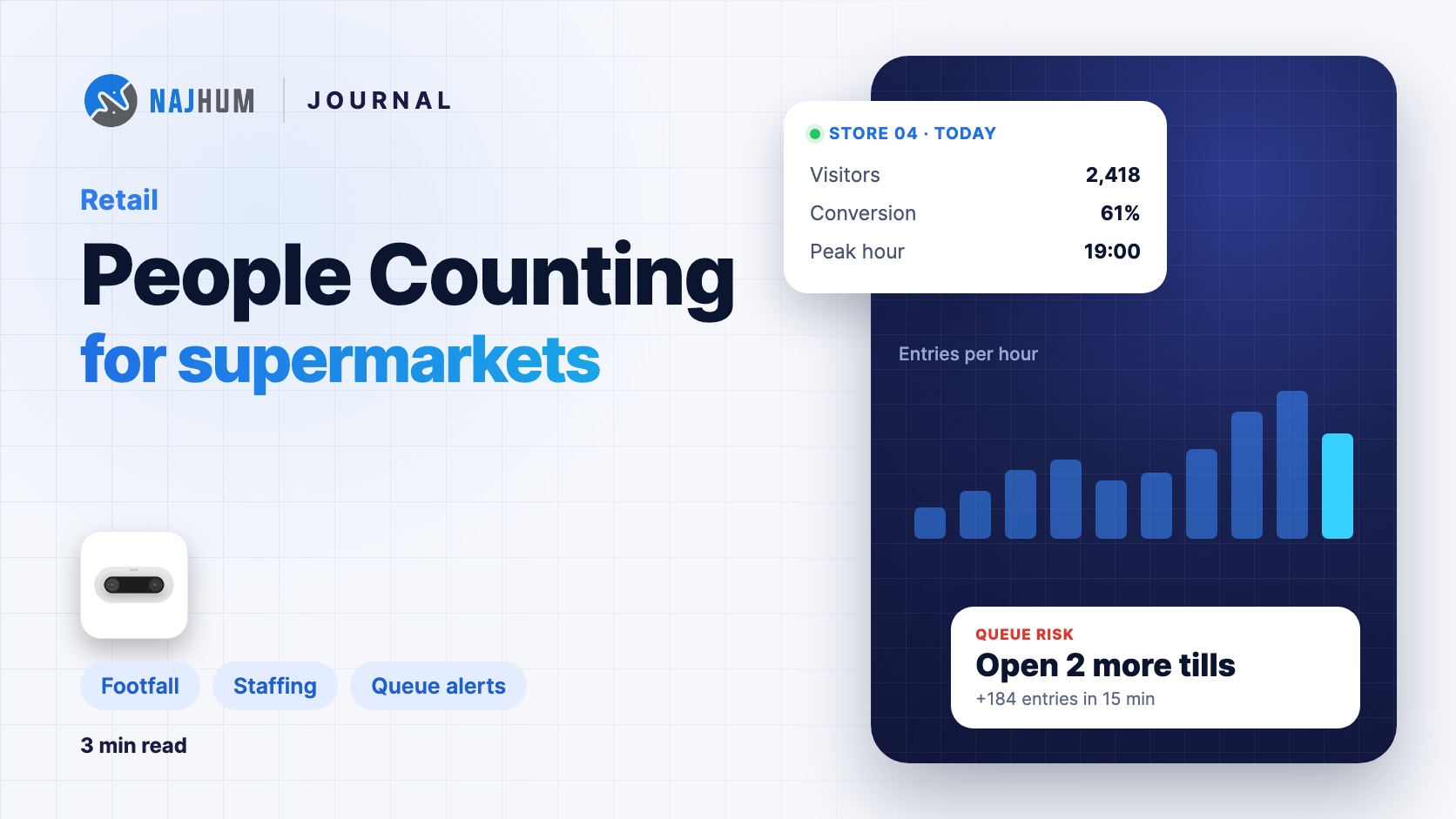
Transactions tell you how many baskets were paid for. They do not tell you how many people came in and left without buying, how many shopped in groups, or how traffic was spread across the day. The gap between visitors and transactions, often called conversion, is one of the most useful numbers in retail, and it is invisible without a counter.
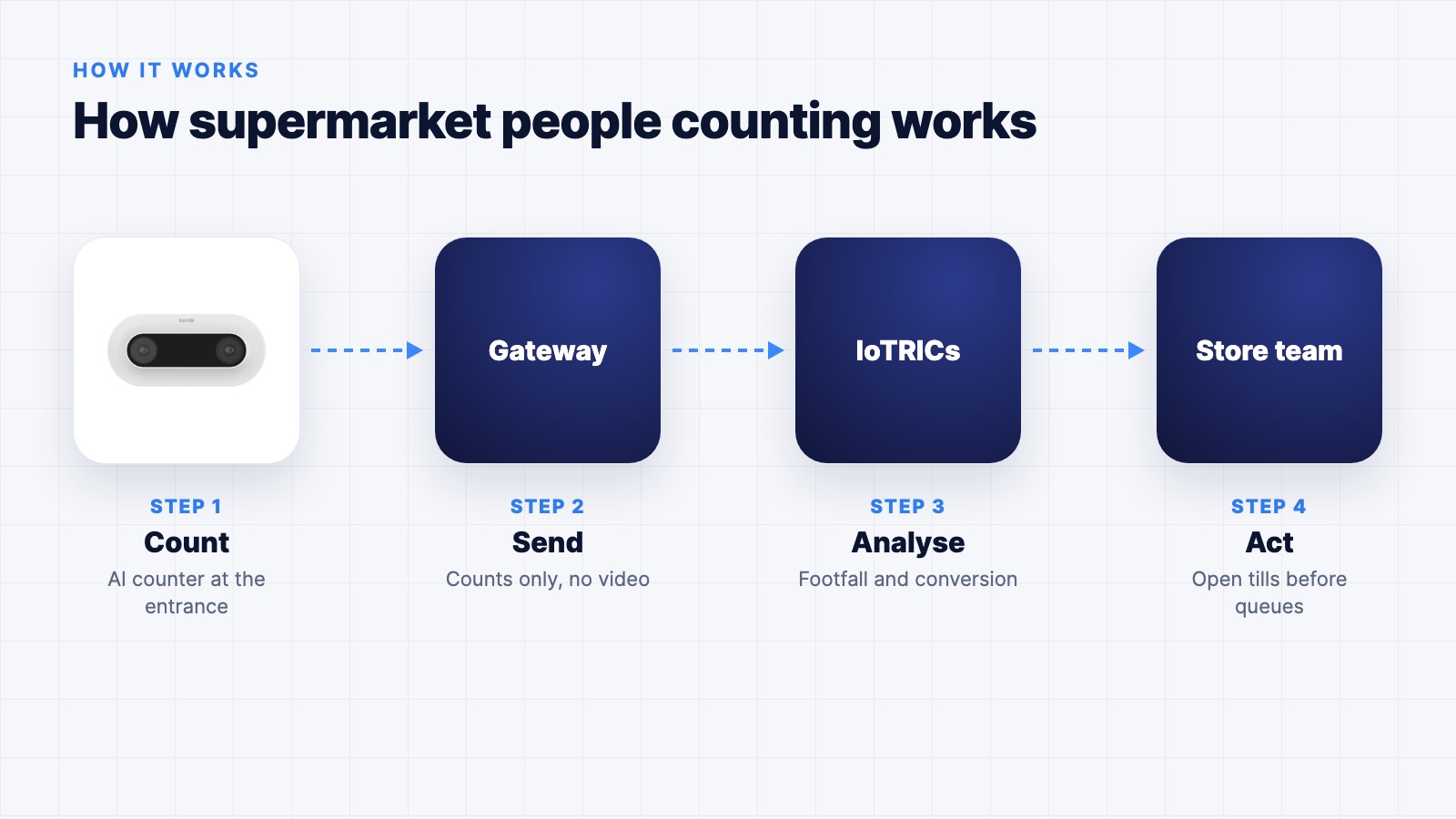
How modern people counters work
Ceiling-mounted AI counters use stereo vision or thermal sensing to detect people crossing a line at the entrance. Counting happens on the device itself, so the system sends counts rather than video, which supports privacy. Good counters can tell the difference between people entering and leaving, ignore trolleys and handle groups walking side by side.
Conversion, visitors against transactions, is invisible without a counter.
What stores do with the data
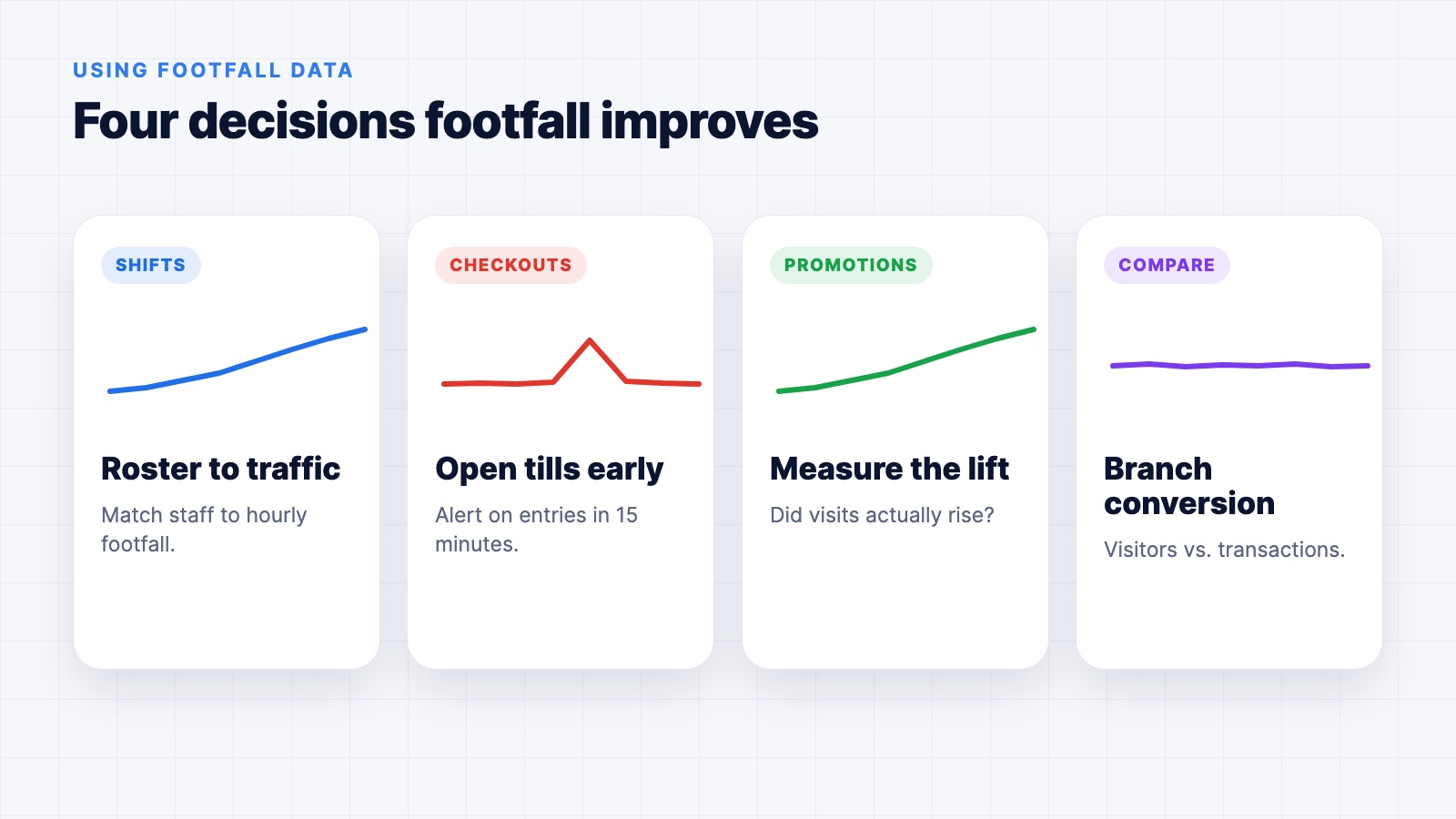
Shift planning: compare hourly footfall by day of week and roster cashiers and floor staff to match.
Checkout opening: trigger an alert when entries in the last 15 minutes pass a threshold, so extra tills open before queues form.
Promotion measurement: see whether a campaign increased visits or simply moved existing shoppers' spending.
Cleaning and replenishment: schedule tasks in quieter windows.
Store comparison: compare conversion across branches with different layouts or locations.
Seasonal patterns in the UAE
Footfall in the UAE moves with Ramadan, Eid, school holidays, summer travel and salary dates. Each store has its own pattern. A year of counting data makes these peaks visible and gives the planning team a reliable baseline for the next season.
Linking footfall to the rest of the store
People counting becomes more valuable when combined with other store systems. On the IoTRICs platform, footfall can sit alongside chiller temperatures, energy use and rodent monitoring. High traffic and a chiller door alert on the same afternoon tell a clear story; so does energy use that does not change between busy and quiet hours.
Installation considerations
Accuracy depends on mounting height, entrance width and lighting. A short survey of each entrance determines the right counter type and position. Wide entrances may need wide-angle models or more than one device.
Frequently asked questions
Does people counting record faces?
No. Counting happens on the device and only counts are sent, which supports privacy.
Are trolleys and groups counted correctly?
Good counters ignore trolleys and handle groups walking side by side.
How many counters does an entrance need?
It depends on entrance width, height and lighting. A short survey decides the type and number.
Turn footfall into better staffing.
People counting is the core of our supermarket solution. Book a demo to see footfall, conversion and store alerts together.