If you have looked at building monitoring recently, you have probably seen the word LoRaWAN. It is often mentioned alongside sensors for temperature, leaks, tank levels and energy. Here is what it means for the people who run buildings, without the radio engineering.
Key takeaways
LoRaWAN sends small readings over long distances on little power.
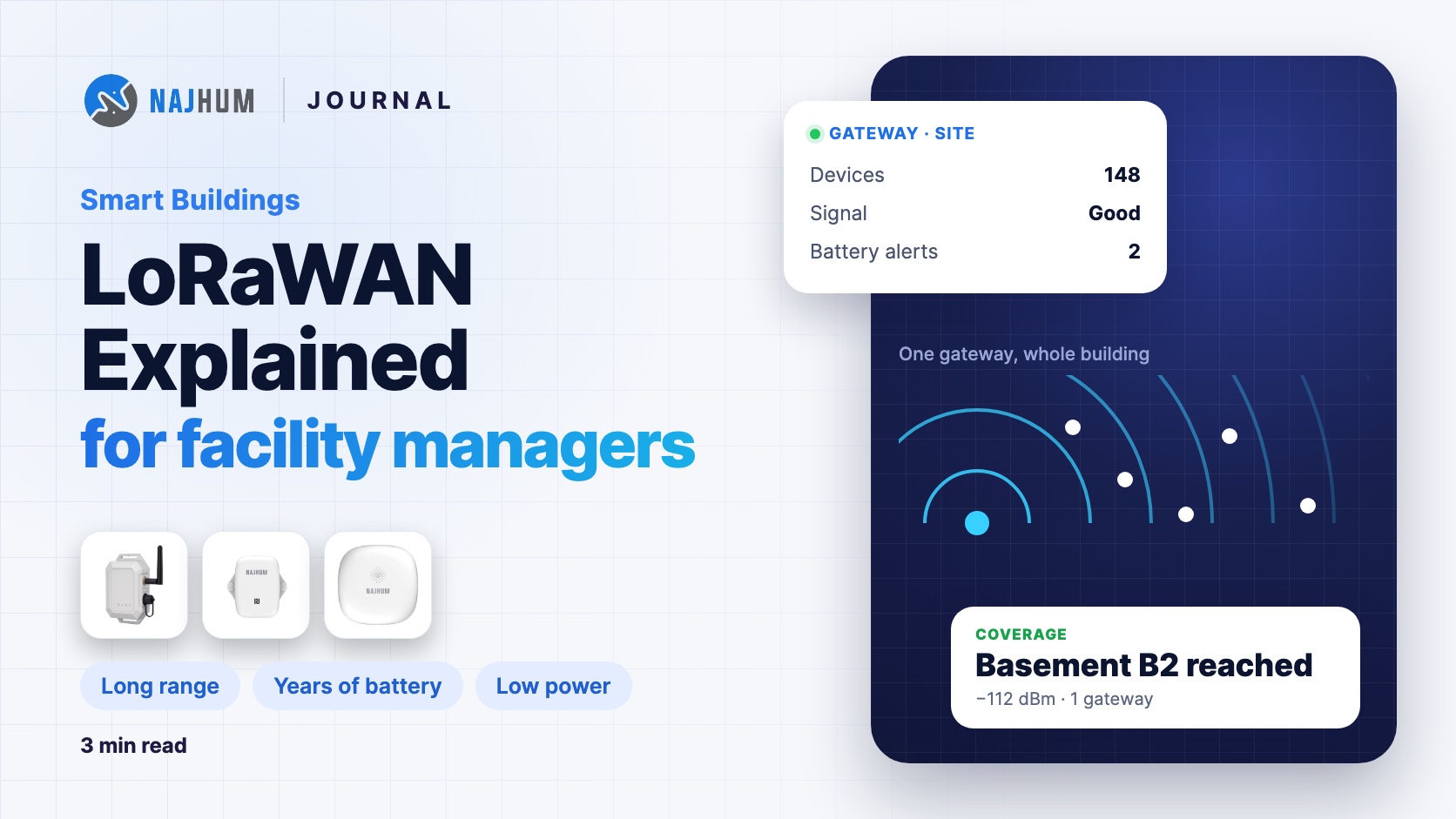
One gateway can often cover a whole building, basements included.
Sensors run for years on a battery.
It isn't for video or high-speed data.
What LoRaWAN is
LoRaWAN is a wireless communication standard designed for devices that send small amounts of data, such as a temperature reading or a door status, over long distances while using very little power. It is maintained by the LoRa Alliance, an industry association, and is supported by many device makers worldwide.
Why it suits buildings
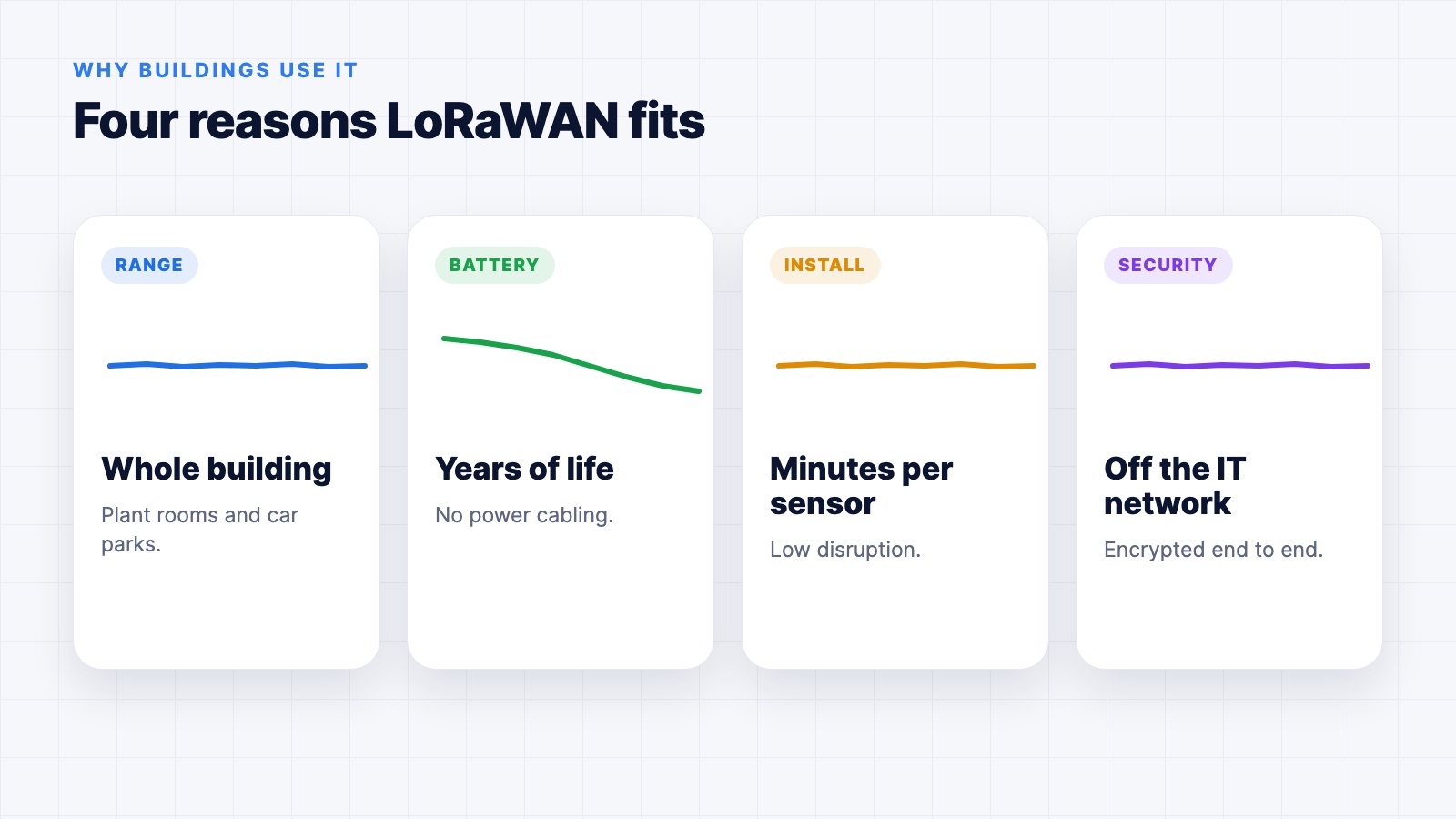
Range: a single gateway can often cover a whole building, including basements, plant rooms and car parks where Wi-Fi struggles.
Battery life: sensors typically run for years on a battery, so no power cabling is needed.
Simple installation: sensors can be fixed in minutes, which keeps disruption low in occupied buildings.
Scale: one gateway can handle a large number of sensors.
Separation from IT networks: sensors do not join the corporate Wi-Fi, which simplifies security reviews.
Sensors don't join the corporate Wi-Fi, which simplifies security reviews.
What it is not for
LoRaWAN sends small messages at intervals, often every few minutes. It is not designed for video, audio or continuous high-speed data. For live video analytics or very fast control loops, other technologies are better. Most monitoring needs, such as temperature, humidity, levels, leaks, energy and occupancy counts, fit LoRaWAN well.
How the pieces fit together
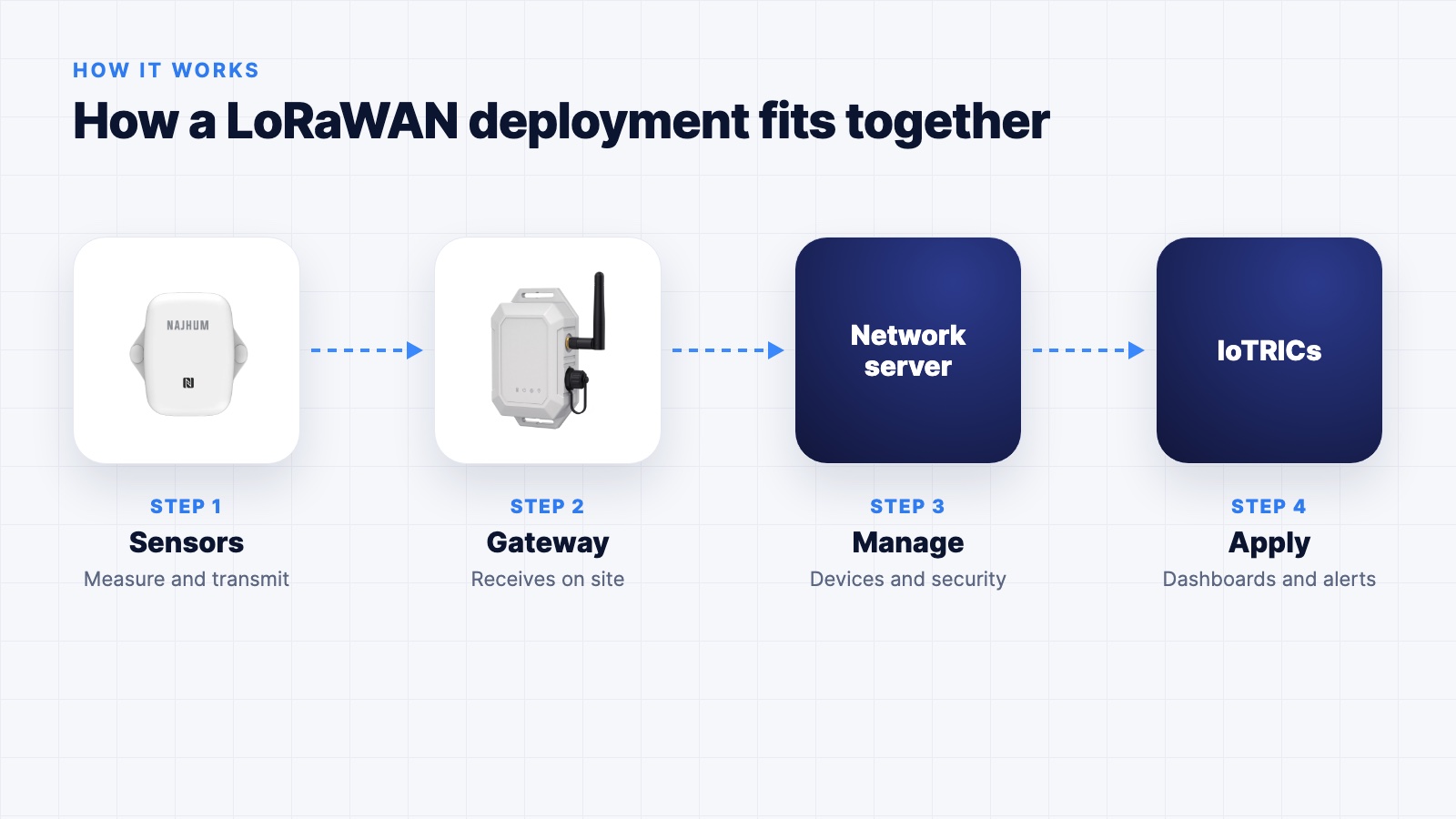
Sensors measure and transmit readings.
Gateways installed on site receive the readings and pass them over the internet or cellular connection.
A network server manages devices and security.
An application platform, such as IoTRICs, turns readings into dashboards, alerts and reports.
Security
LoRaWAN uses encryption between the device and the network, and between the device and the application. As with any system, good practice matters: managed device keys, secure gateways and a platform with proper access controls.
Mixing with other technologies
Many sites combine LoRaWAN with Bluetooth for indoor location, with existing building management systems via integration, and with cellular for remote locations. The platform brings it all into one view so the facilities team does not have to think about which radio produced which reading.
Questions to ask a provider
Who installs and maintains the gateways?
What happens when a sensor battery runs low?
Can the platform show data from other systems you already have?
Frequently asked questions
What data suits LoRaWAN?
Temperature, humidity, levels, leaks, energy and occupancy counts, sent every few minutes.
Is LoRaWAN secure?
It encrypts between device and network and between device and application; good key and gateway management still matter.
Can it work with our BMS?
Yes. The platform brings LoRaWAN data together with existing systems.
Connect your building without rewiring it.
Najhum designs, installs and operates complete monitoring solutions on IoTRICs. Discuss your project with our team.