In the GCC, farms often depend on groundwater, treated water or desalinated supplies, each with its own quality challenges. Salinity, pH and suspended solids vary between sources and over time. Because water is applied to crops every day, small quality problems add up quickly in soil, plants and irrigation equipment.
Key takeaways
GCC farms use groundwater, treated and desalinated water with different quality.
pH, EC, dissolved oxygen and turbidity matter most.
Continuous sensors show changes that spot checks miss.
View water quality together with soil data.
What to measure
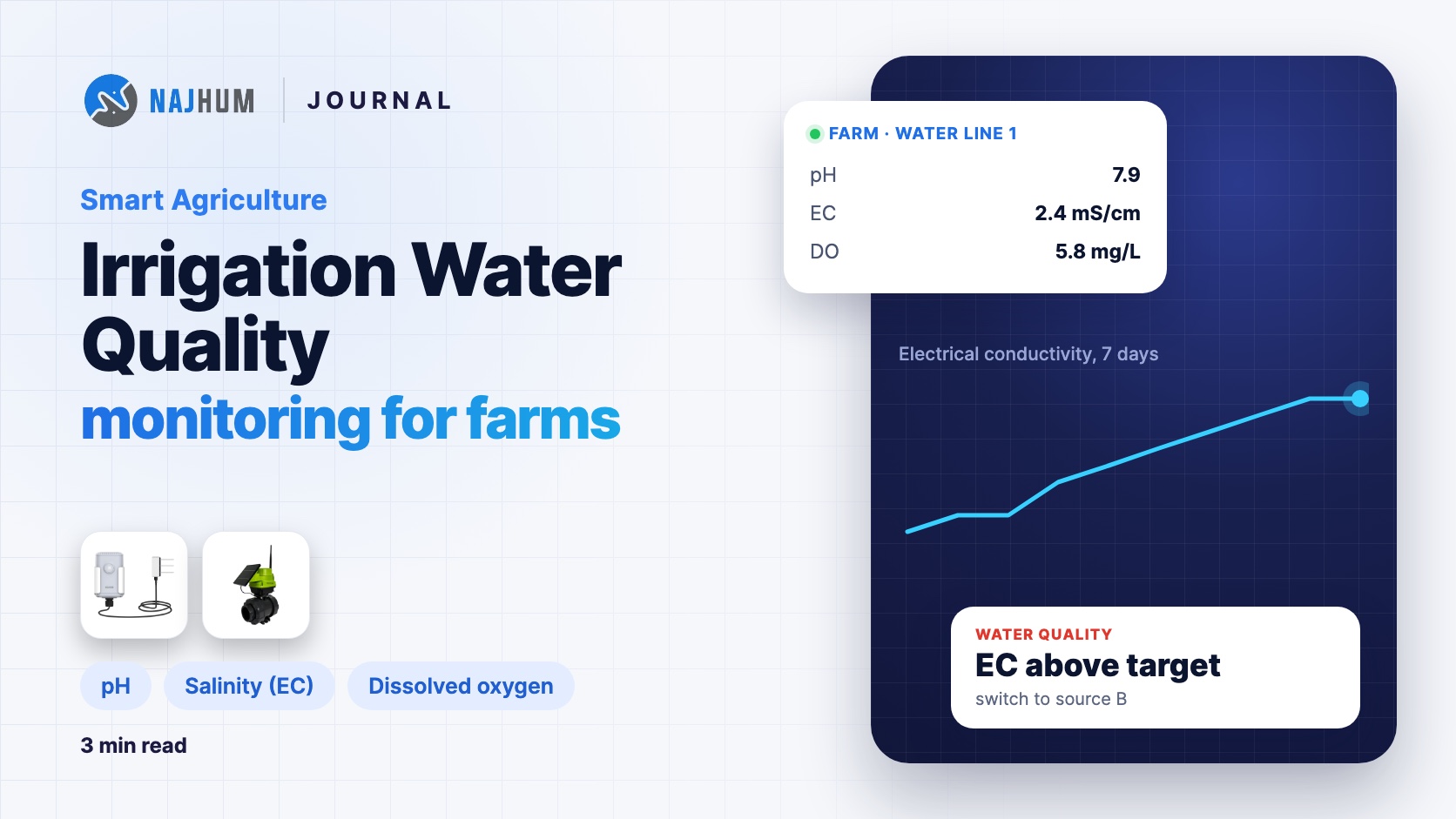
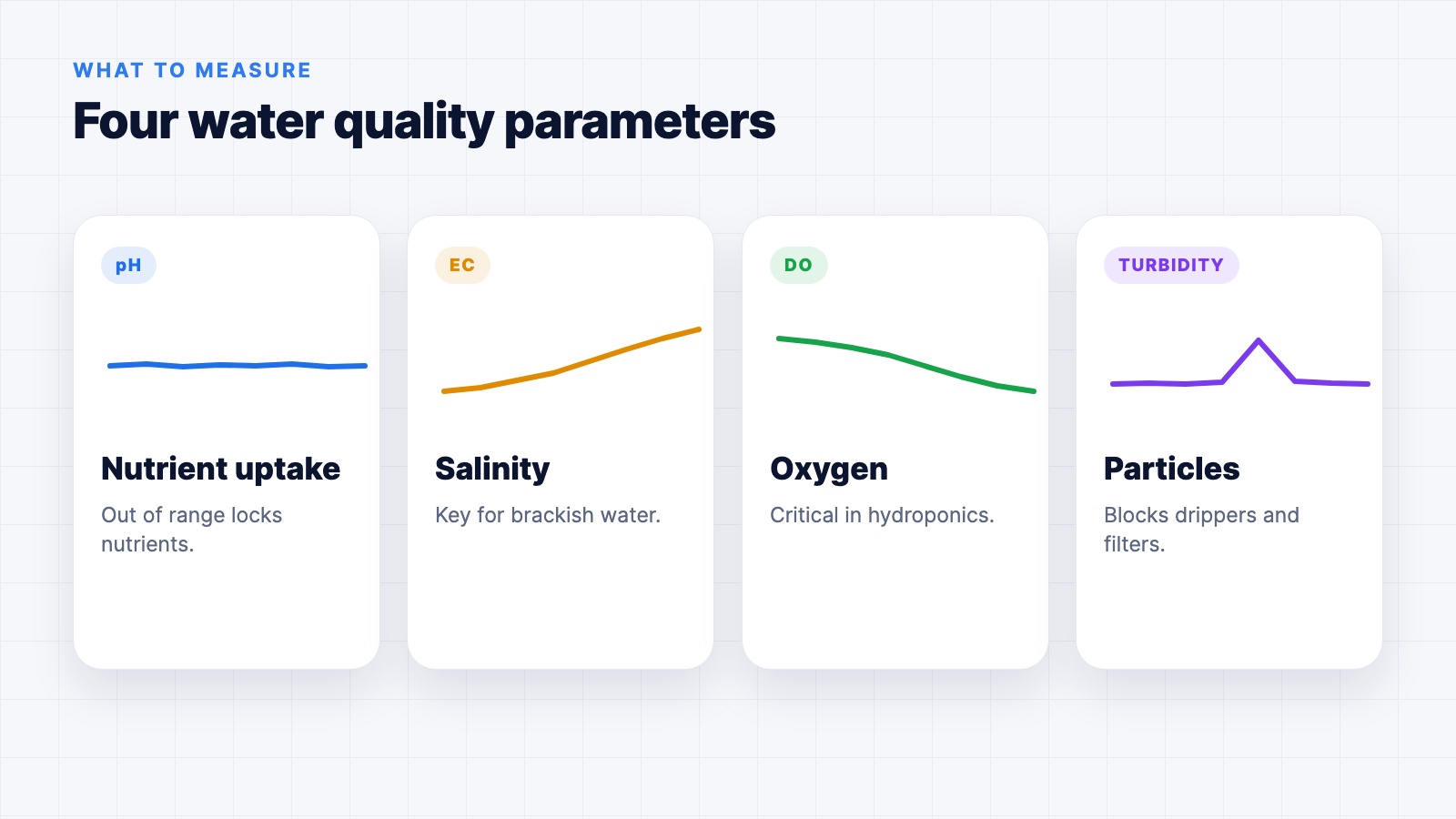
pH: affects how well plants absorb nutrients. Water that drifts out of the right range can lock out nutrients even when fertiliser is applied.
Electrical conductivity (EC): a practical indicator of salinity and nutrient concentration, important where groundwater is brackish.
Dissolved oxygen (DO): critical in hydroponic systems, where roots sit in water and low oxygen can quickly damage plants.
Turbidity: suspended particles that can block drippers and filters.
Temperature: warm water holds less oxygen, which matters during summer.
Spot checks vs continuous monitoring
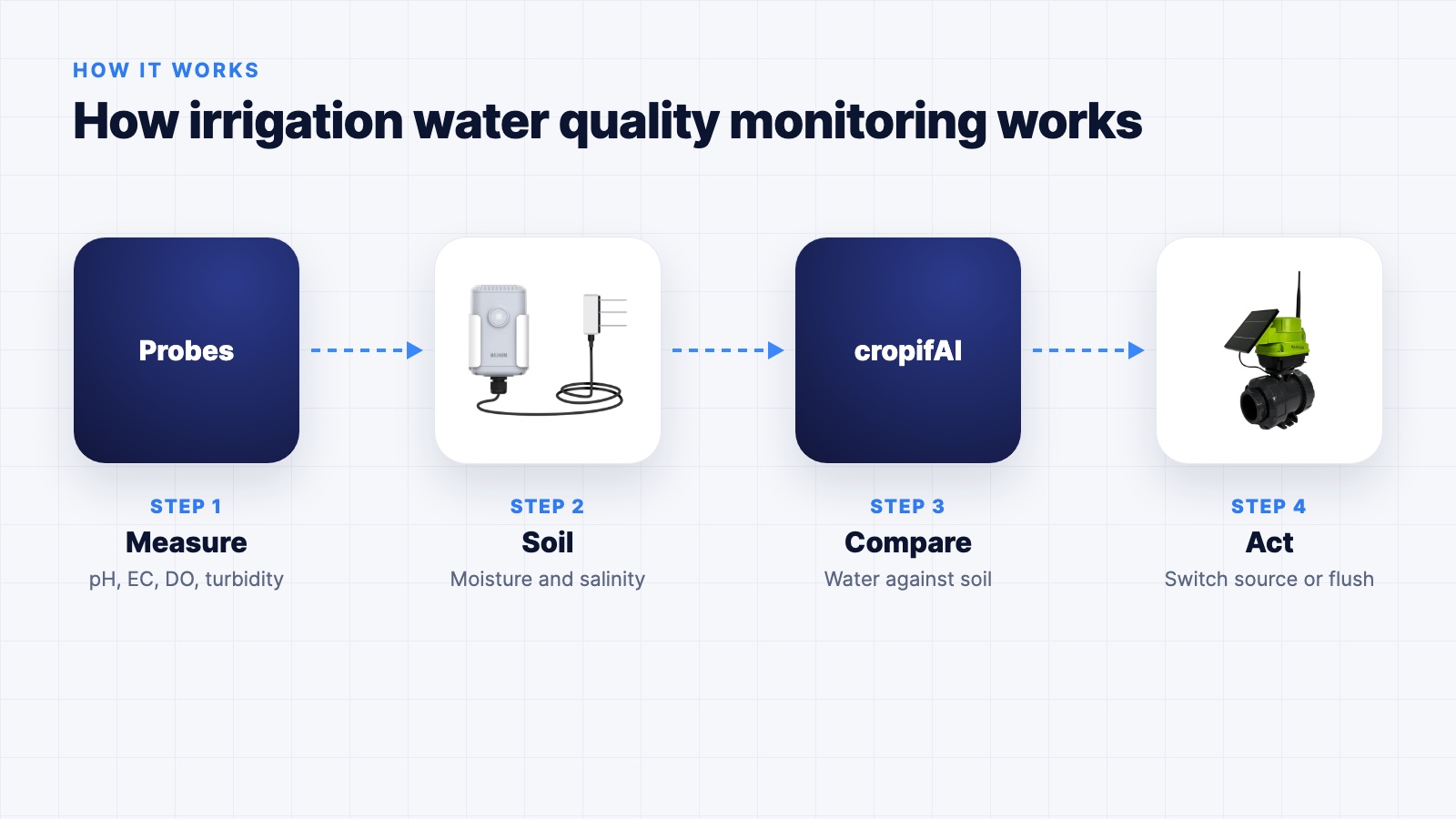
Handheld meters and lab samples give accurate snapshots, but only when someone takes them. Continuous sensors show how quality changes through the day and between sources, and alert the farm team when a value moves outside the agreed range.
If soil salinity is rising, check the irrigation water before adding more fertiliser.
Linking water and soil
Water quality is most useful when viewed alongside soil conditions. If soil salinity is rising, the cause may be the irrigation water, insufficient leaching or both. Seeing soil moisture, soil EC and water quality together helps growers decide whether to change the water source, adjust the irrigation schedule or flush the soil.
Protecting the irrigation system
High turbidity and scaling minerals clog filters and drippers, leading to uneven watering. Monitoring turbidity and flow together shows when filters need cleaning and when emitters are blocking, before plants show stress.
Hardware chosen per site
There is no single sensor that fits every farm. Open-field farms, greenhouses and hydroponic systems have different needs. A site survey determines the right mix of soil sensors, water quality probes, weather stations and valve controllers.
Bringing it into one dashboard
cropifAI brings soil, water, weather and irrigation data into one web dashboard that works on any browser, including on a phone, so farm managers can follow conditions across plots and act with confidence.
Frequently asked questions
Is one sensor enough for every farm?
No. Open fields, greenhouses and hydroponics need different mixes, chosen after a site survey.
Can I see the data on my phone?
cropifAI is a web dashboard that works in any browser, including on a phone.
Why does warm water matter?
Warm water holds less oxygen, which matters in summer and in hydroponic systems.
Know what's in your irrigation water.
Learn more about cropifAI, or discuss your farm with our agritech team.