Standby generators protect hospitals, data centres, telecom sites, construction projects and remote facilities. They are only as reliable as the fuel in their tanks. A generator that starts during a power cut and stops an hour later because the day tank was low is not standby power at all.
Key takeaways
A generator is only as reliable as the fuel in its tank.
Ultrasonic sensors read level through the tank wall.
Level plus run status explains where fuel went.
Deliveries are planned on real levels and verified by the level rise.
The fuel problems sites actually face
Tanks running low unnoticed because levels are checked infrequently, especially at remote sites.
Unexplained fuel loss from leaks or unauthorised removal.
Inefficient deliveries because refills are scheduled without knowing actual levels.
Disputes over quantities delivered or consumed.
Non-intrusive level measurement
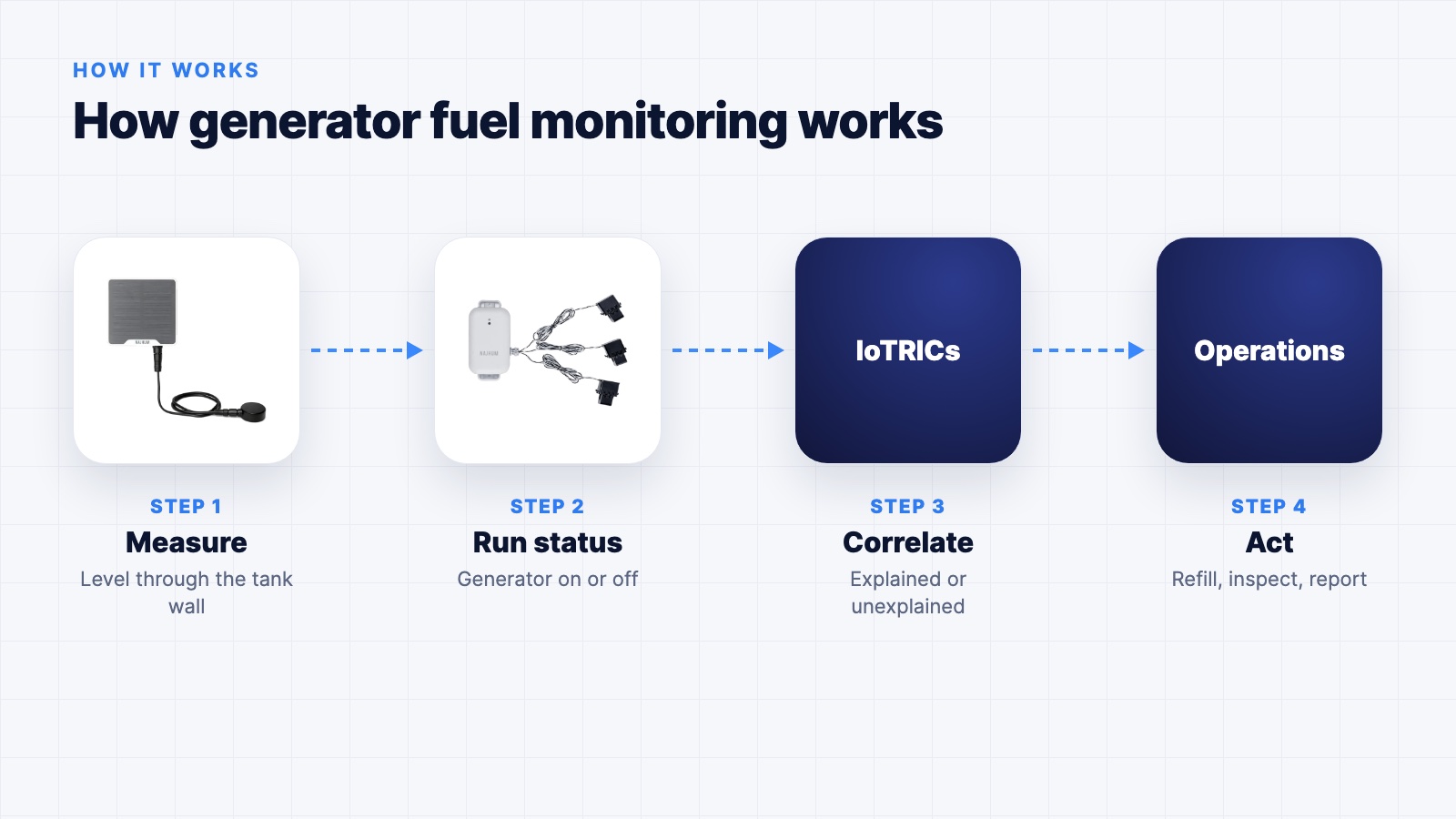
Ultrasonic fuel level sensors can be mounted on the outside bottom of a metal tank and measure the fuel level through the tank wall. There is no need to drill into the tank or put a probe in the fuel, which simplifies installation on existing tanks and avoids safety concerns with opening them.
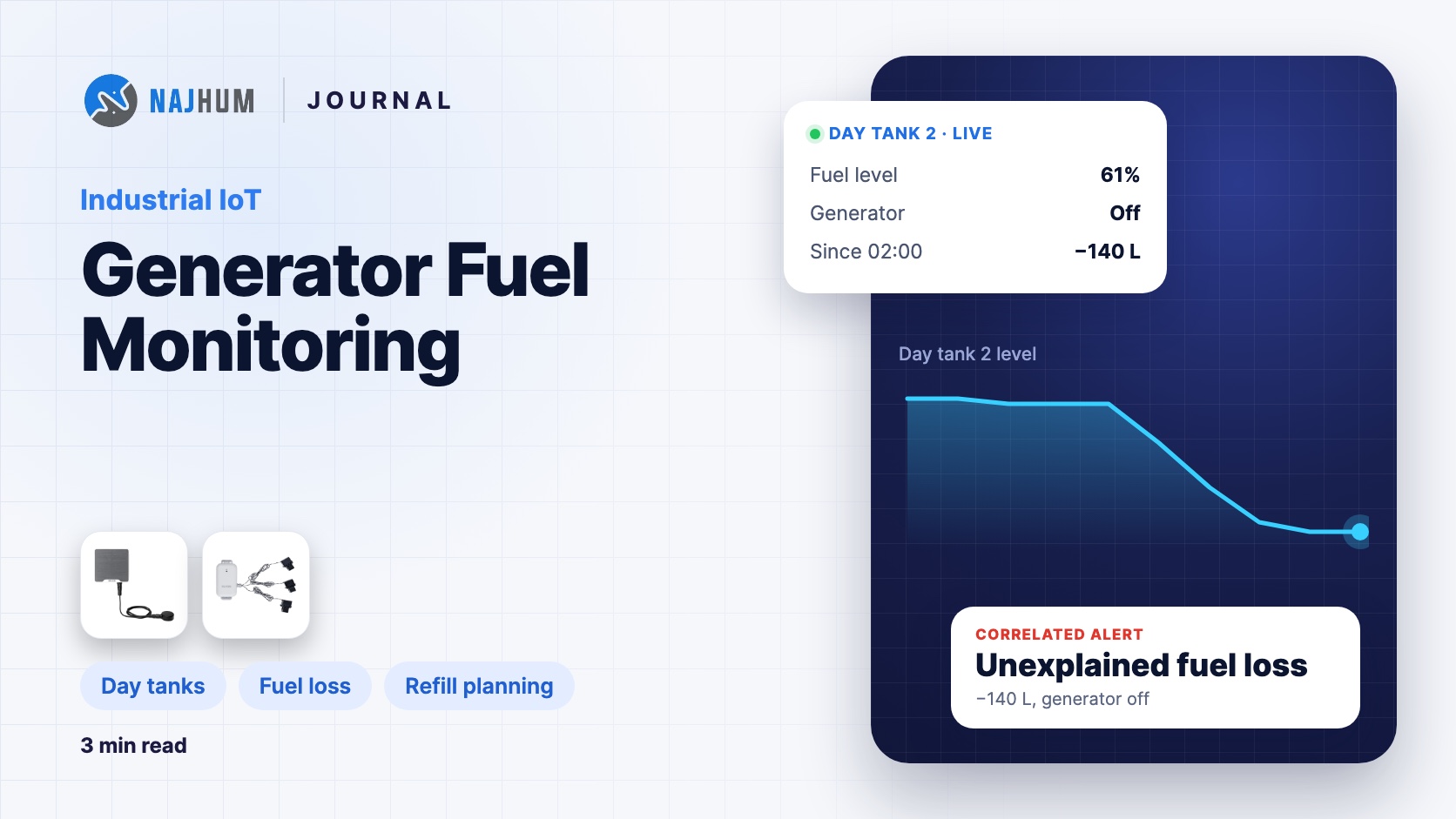
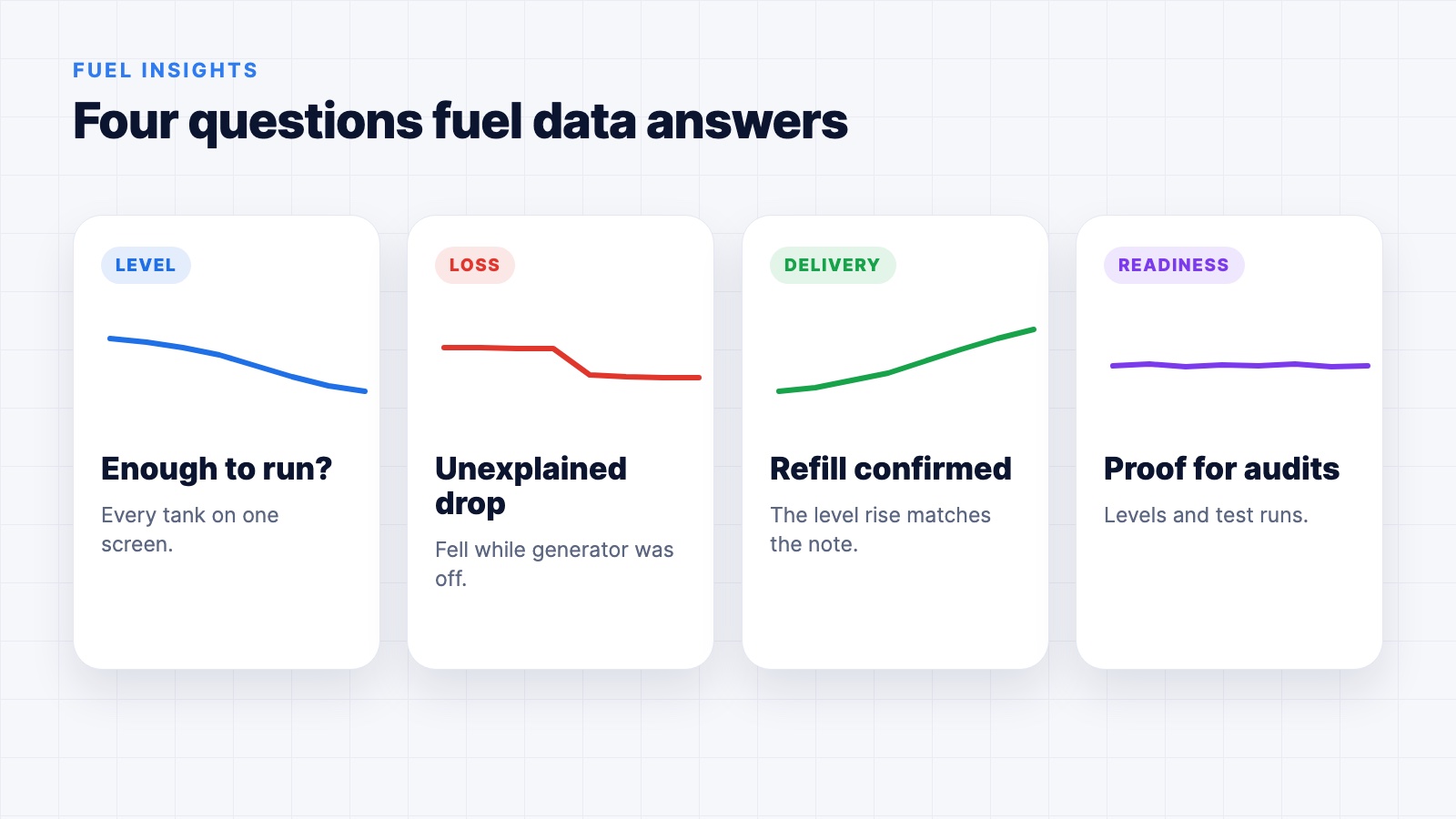
“Day tank 2 fell 140 L while no generator was running.” Specific, timestamped and actionable.
Correlation reveals the story
Fuel level alone tells you how much is in the tank. Combined with generator run status, it tells you where the fuel went. A current sensor on the generator output, or a run signal from its controller, shows when the generator was running.
On the IoTRICs platform, this produces alerts such as “Day tank 2 fell 140 L while no generator was running.” That alert is specific, timestamped and actionable: check for leaks, check transfer pumps, and review site access logs for that period.
Planning refills on real data
With levels from every tank on one screen, deliveries can be planned when tanks reach an agreed level and routed efficiently across sites. A sharp rise in level confirms when a delivery arrived and how much was added, which can be checked against the delivery note.
Proving readiness
For critical facilities, it is important to show that standby systems are ready. A history of fuel levels and generator test runs provides evidence for audits and client reports without manual log sheets.
Getting started
Identify each tank, its shape and dimensions, and how it is accessed. A survey confirms where sensors can be mounted and whether generator run status is best taken from current measurement or a controller signal.
Frequently asked questions
Do we need to drill into the tank?
No. Ultrasonic sensors mount on the outside bottom of metal tanks.
How is generator run status measured?
From current on the generator output or a run signal from its controller.
Is it useful for remote sites?
Yes. Levels from every site support refill planning and routing.
Keep standby power ready to run.
Fuel monitoring is available across our facility management and data centre solutions. Book a demo to see fuel alerts on IoTRICs.