When an alarm sounds on a large site, the first question emergency teams ask is simple: is everyone out? On a plant, a construction project, a hospital or a university campus with hundreds or thousands of people, answering that question with a clipboard can take a long time, and the answer is often uncertain.
Key takeaways
Paper roll calls are slow and miss visitors and contractors.
Wearable tags check people in at assembly points automatically.
Coordinators see who is safe, who is inside and where they were last seen.
Battery gateways and on-premise records keep working when power fails.
Why paper mustering struggles
The list is out of date. Visitors, contractors and shift changes make it hard to know who is on site at that moment.
Counting is slow. Marshals read names aloud in a noisy, stressful environment.
Missing people are hard to locate. A name not ticked tells you someone is missing, but not where they were last seen.
Those minutes matter. Rescue teams may enter a building to look for people who are already safe elsewhere, or delay searching for someone who is actually inside.
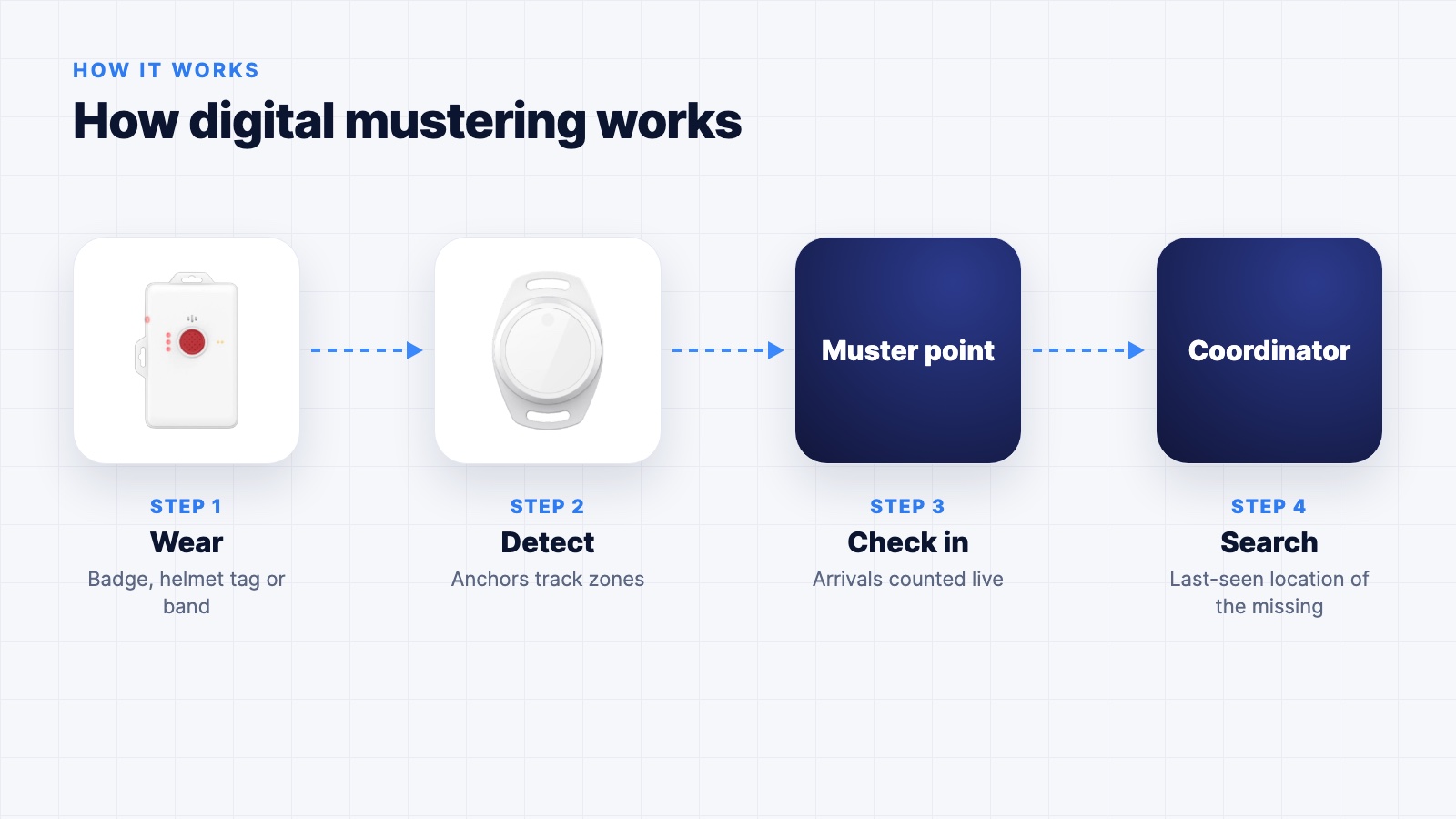
How digital mustering works
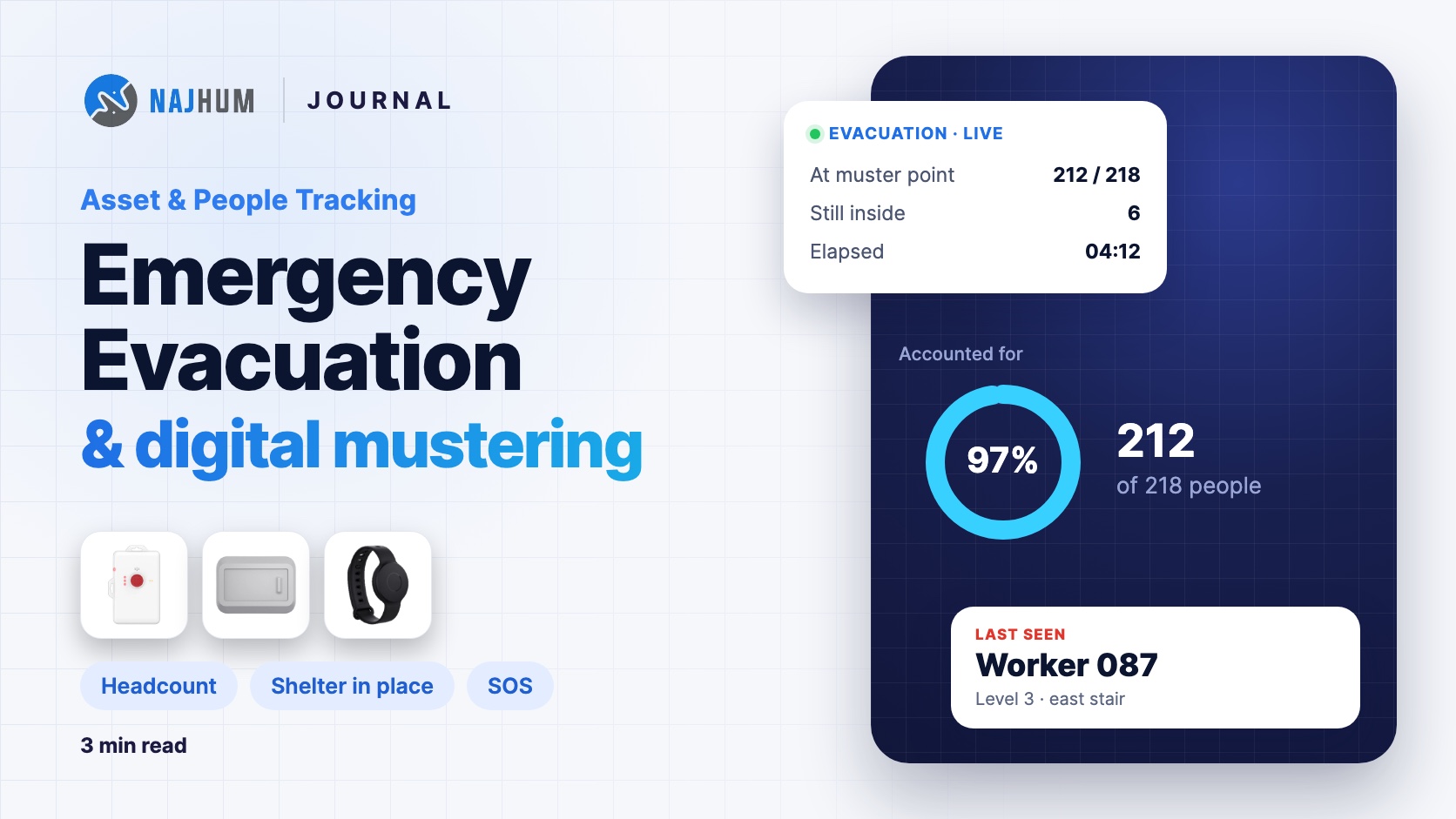
Each person carries a small wearable tag: a badge, a helmet tag or a wristband. Receivers and location anchors across the site detect the tags. When an evacuation starts, assembly points become check-in zones. As people arrive, their tags are detected automatically and the headcount updates live.
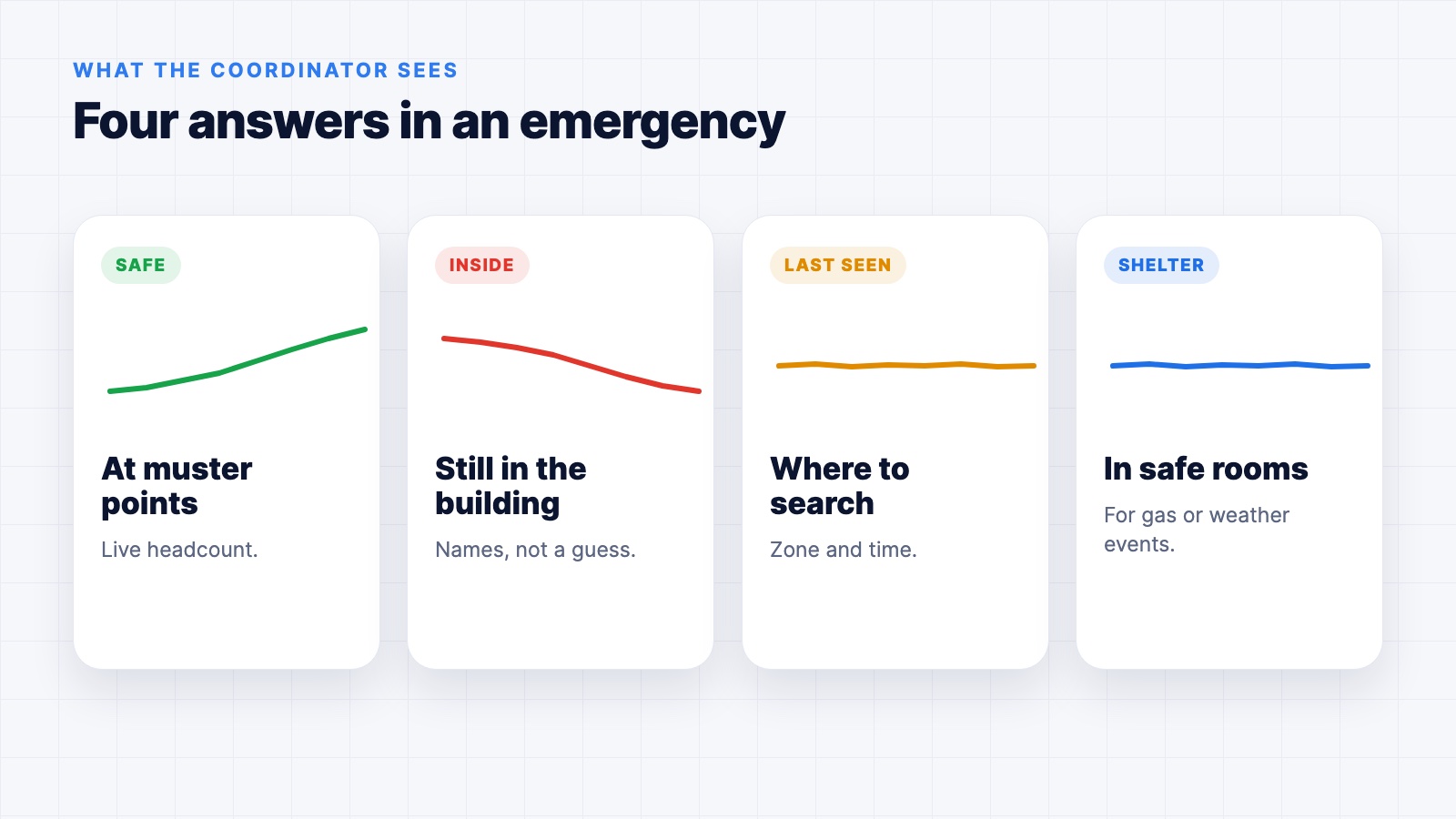
The emergency coordinator sees three lists: who is safe at an assembly point, who is still inside, and where each missing person was last detected. That turns a search into a targeted response.
Who is safe, who is still inside, and where each missing person was last seen.
Shelter in place
Not every emergency means leaving the building. Gas releases, severe weather or security incidents may require people to shelter in designated rooms. The same system confirms who has reached a safe room and who has not, which is very hard to do manually.
Sites with patchy infrastructure
Emergencies often coincide with power or network problems. Systems designed for safety should keep working when they are needed: battery or solar-powered gateways, tags with long battery life, and records stored locally on-premise so the headcount remains available even if the internet connection drops.
Beyond emergencies
The same tags support everyday safety: SOS buttons for lone workers, alerts when someone enters a restricted area, and fall detection on some wearables. They also give an accurate record of time on site for contractors.
Privacy and trust
People tracking only works if the workforce trusts it. Be clear about what is tracked, when, and who can see it. Many sites limit live location views to emergencies and safety events, and keep routine data aggregated.
Frequently asked questions
What if the network goes down?
Battery or solar gateways and records stored on-premise keep the headcount available.
Does it support shelter in place?
Yes. The same system confirms who has reached a designated safe room.
What about privacy?
Many sites limit live location views to emergencies and safety events and keep routine data aggregated.
Know who is safe in minutes.
Emergency evacuation is the lead use case of our people tracking solution. Book a demo to see a live mustering drill.