Large construction projects in the GCC can have thousands of workers from many subcontractors on site at the same time. The site layout changes every week as structures rise and zones open and close. Keeping track of who is where, and making sure help arrives quickly when something goes wrong, is a constant challenge for HSE teams.
Key takeaways
A helmet tag adds nothing new for workers to remember.
Supervisors see headcount by zone, including high-risk areas.
SOS buttons send the worker's location to the safety team.
Solar bridges and battery anchors move as the site changes.
Why the hard hat?
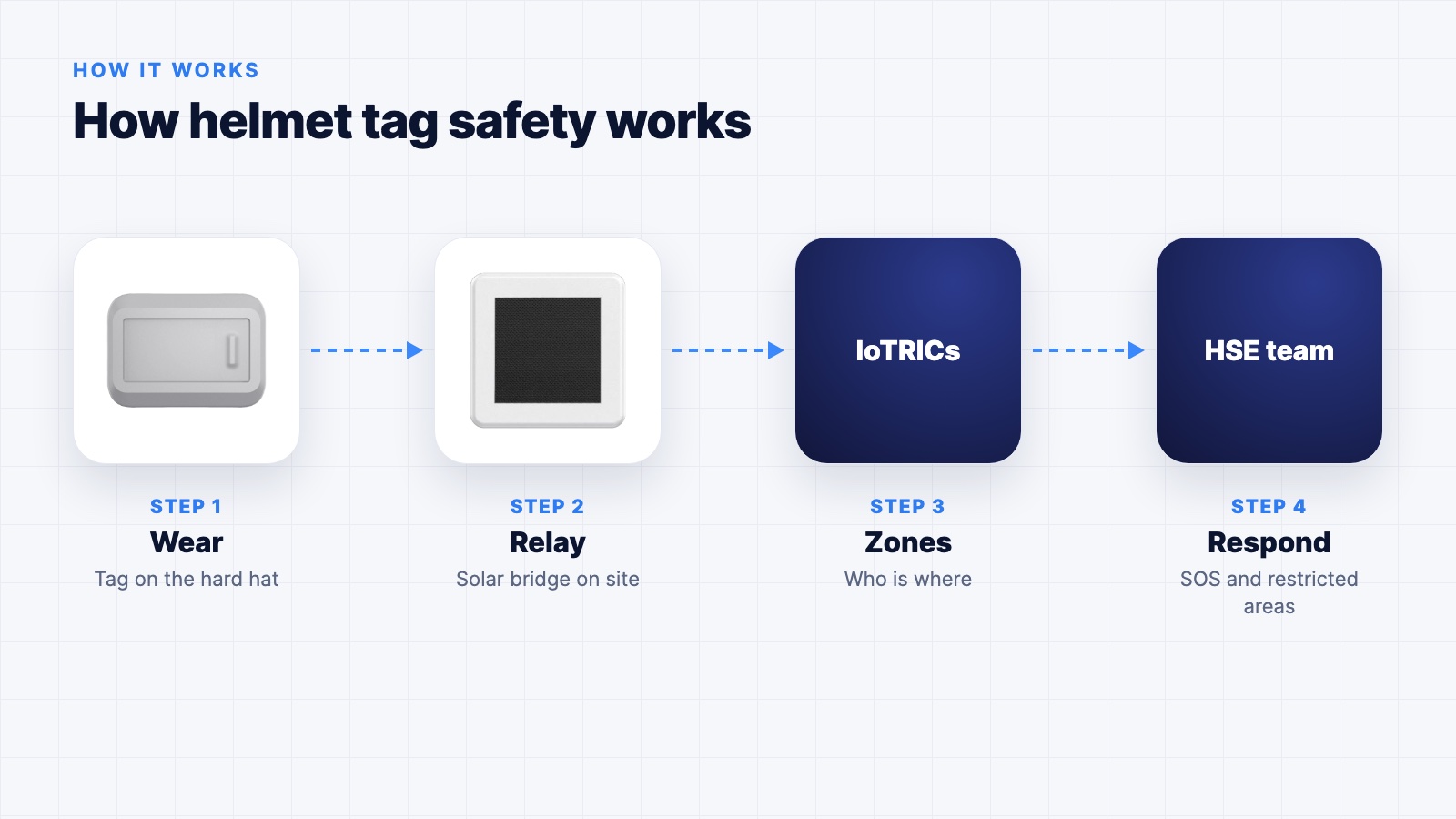
A hard hat is already mandatory, already worn all day, and sits high on the body where wireless signals travel well. A small tag clipped to the helmet adds no extra item for workers to remember, which makes compliance much easier than asking people to carry a separate badge.
What helmet tags make possible
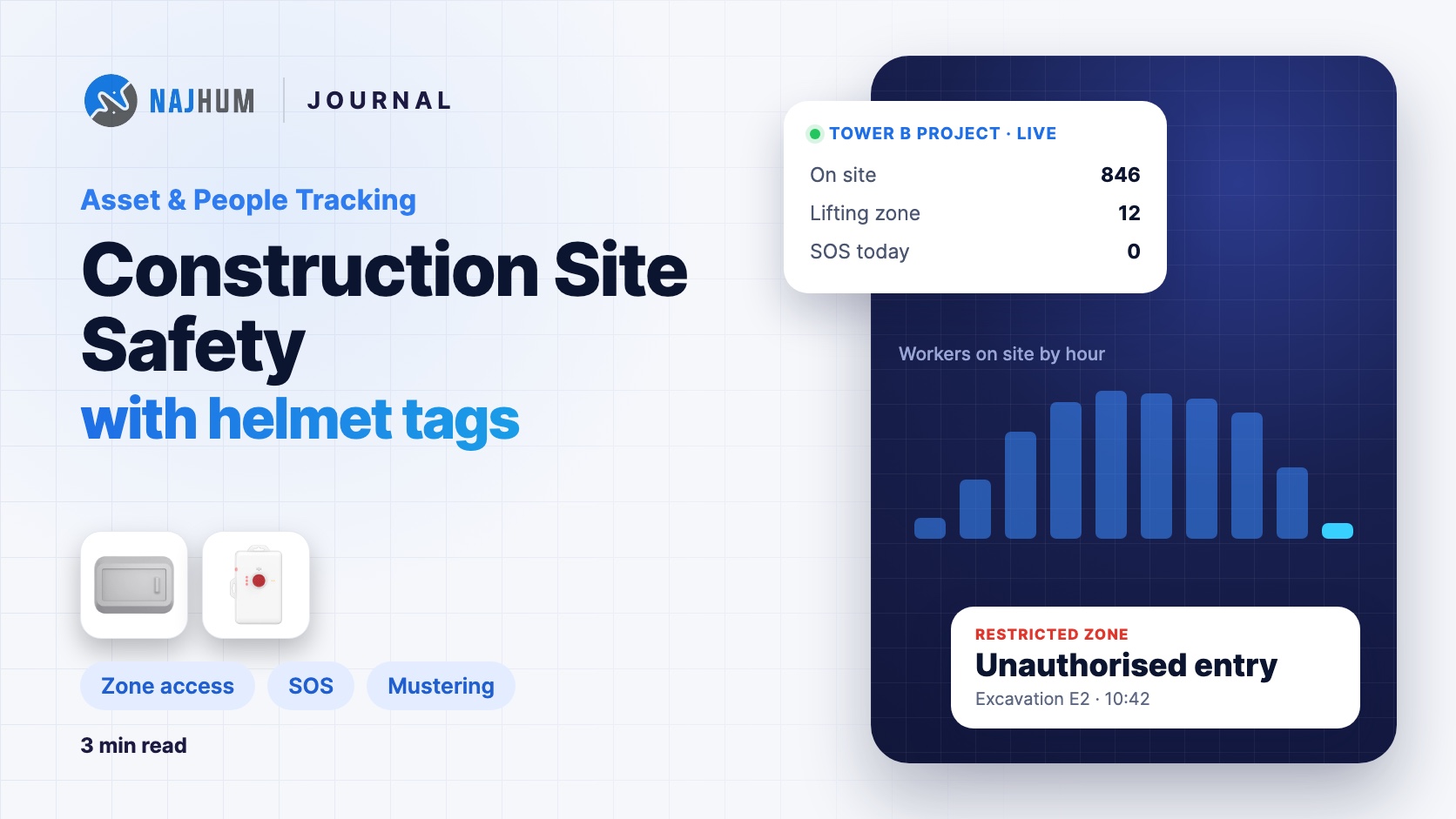
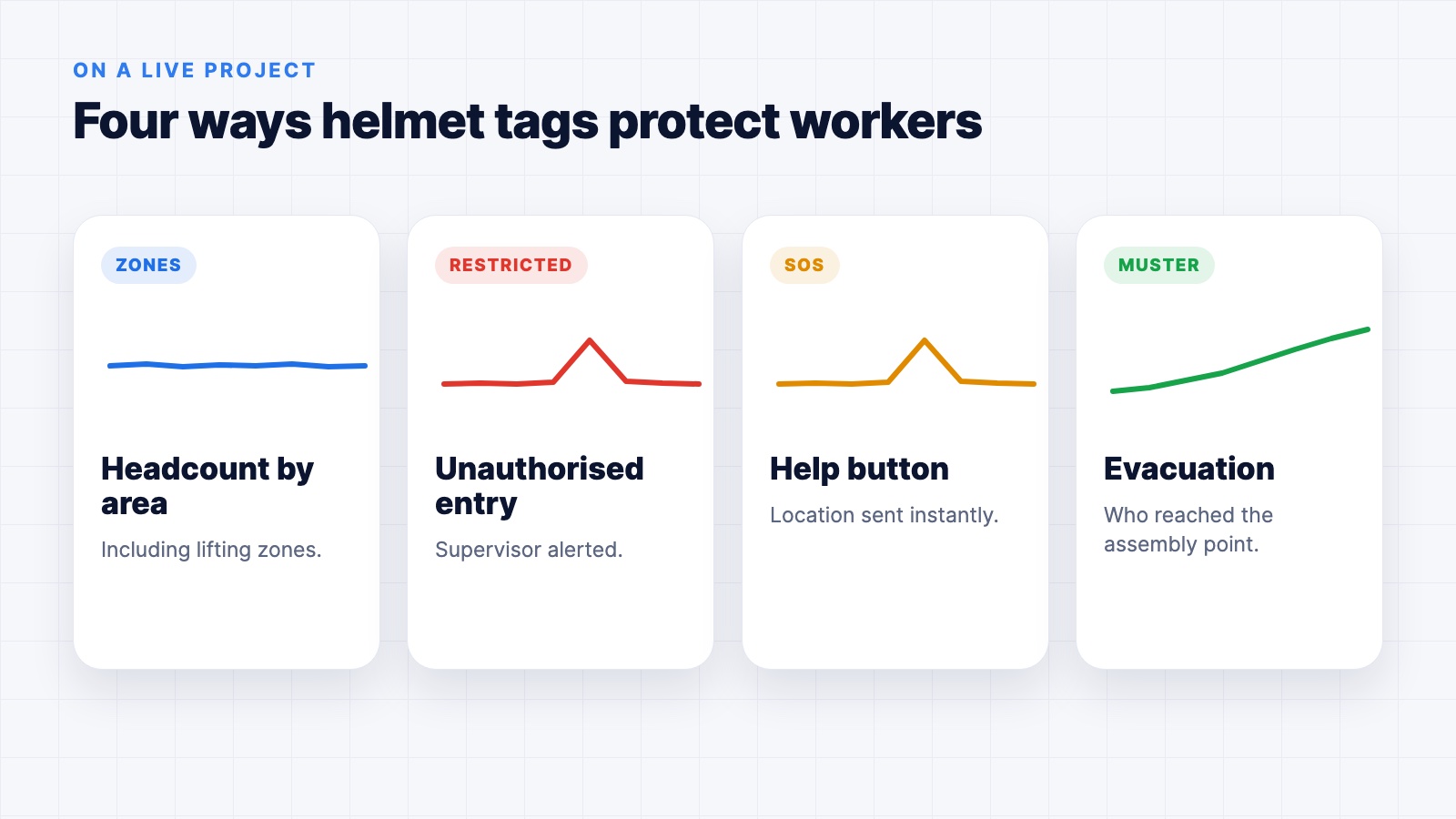
Zone awareness: know how many people are in each area, including high-risk zones such as lifting areas or excavations.
Restricted area alerts: notify supervisors when someone without authorisation enters a hazardous zone.
SOS: a worker can press a button to call for help, sending their location to the safety team.
Mustering: during an evacuation, the system confirms who has reached the assembly point and shows where missing workers were last detected.
The hard hat is already mandatory, already worn all day, and sits where signals travel well.
Infrastructure that moves with the site
Construction sites rarely have permanent power or networks in the early phases. Solar-powered bridges and battery-powered location anchors can be installed and repositioned as the project progresses, while gateways relay data to the platform. Wide outdoor areas can be covered with GPS-capable badges, while enclosed floors use Bluetooth anchors.
Heat and long shifts
Summer heat in the region makes worker welfare a daily concern. Tags with an SOS function and supervisors who can see where their teams are working help respond quickly when someone feels unwell, especially in remote corners of a large site.
Data for better planning
Aggregated data shows how many people worked in each zone, when areas were busiest and how long crews spent on particular tasks. HSE and planning teams can use this to adjust logistics, welfare facilities and supervision.
Introducing tags to the workforce
Explain the purpose clearly: safety and emergency response. Involve subcontractor supervisors early, run a drill to show how mustering works, and be transparent about how data is used. Adoption is much higher when workers see the system as something that protects them.
Frequently asked questions
Do construction sites need permanent power for this?
No. Solar-powered bridges and battery anchors can be repositioned as work progresses.
Does it cover outdoor areas?
Yes. GPS-capable badges cover wide outdoor areas; Bluetooth anchors cover enclosed floors.
How do workers accept it?
Explain the safety purpose, involve subcontractor supervisors and run a mustering drill.
Protect every worker on your project.
Learn more about our people tracking solution, or discuss your project with Najhum.