
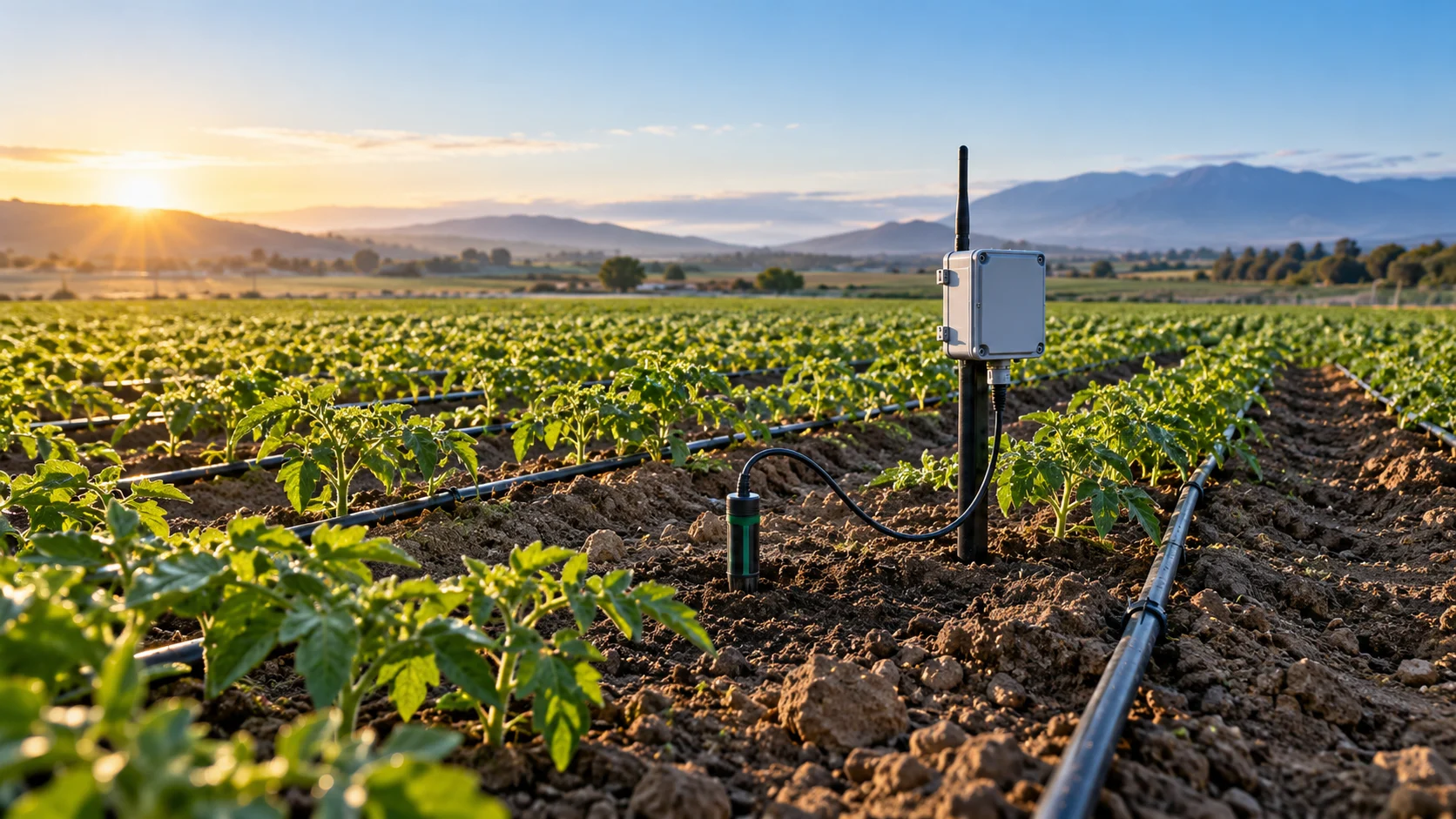
A soil-moisture reading is a measurement from a particular place at a particular time. To support an irrigation decision, it needs context: the crop, the root zone, the soil, recent irrigation, and what is happening elsewhere in the field.
A precision-irrigation project should make that context easier to review. Begin with a monitoring plan that supports the farm team’s judgement, then consider automation only after the measurements and operating process have been checked.
Start with the management zones
Discuss the field with the people who know it. Identify differences in soil, terrain, crop development, and irrigation layout. Record where the team already observes uneven drying or inconsistent water delivery.
Use that discussion to define the zones you want to understand. One convenient sensor location should not automatically be treated as representative of an entire farm. Ask an agronomist or irrigation specialist to help determine suitable locations and measurement depths for the crop and soil.
Treat installation as part of measurement quality
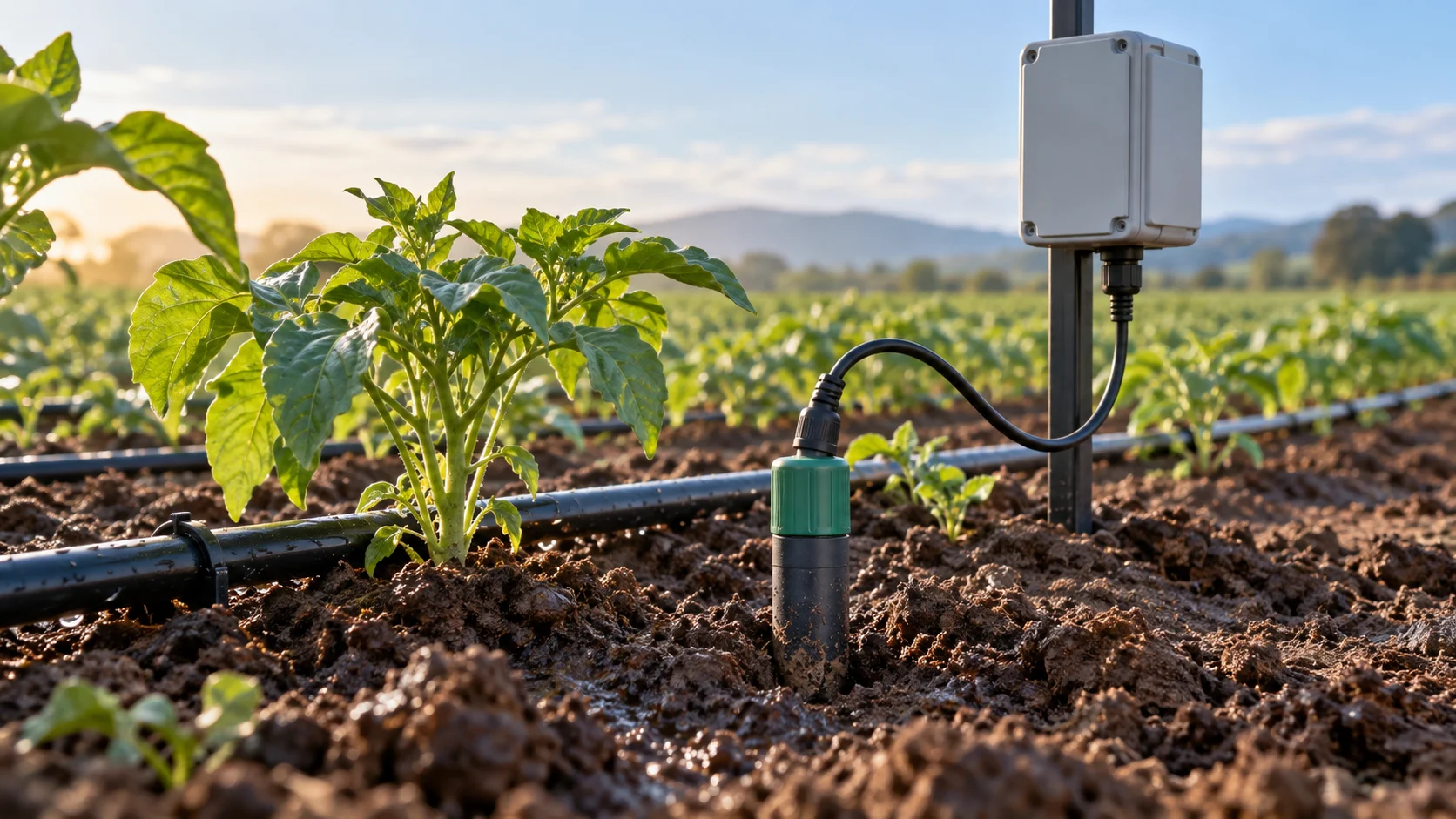
University of Minnesota Extension’s soil-moisture guidance emphasises sensor placement and installation, including good contact with the surrounding soil. It also recommends interpreting measurements alongside irrigation-scheduling information. These principles are useful prompts for planning; crop thresholds and local decisions still need to fit the farm’s conditions.
Keep an installation record for every sensor. Include its location, depth, model, configuration, and the zone it is intended to represent. Follow the manufacturer’s instructions and review the readings with field observations before relying on them.
Review trends alongside irrigation events
A single number may not explain whether an irrigation event had the intended effect. Review how readings change before and after watering and compare those observations with the irrigation record.
Where flow or pressure is measured, use those readings to support investigation of water delivery. A valve command is an instruction; it does not, by itself, establish how much water reached the crop. Define which measurements are needed to check the outcome at your site.
Make remote control a separate decision
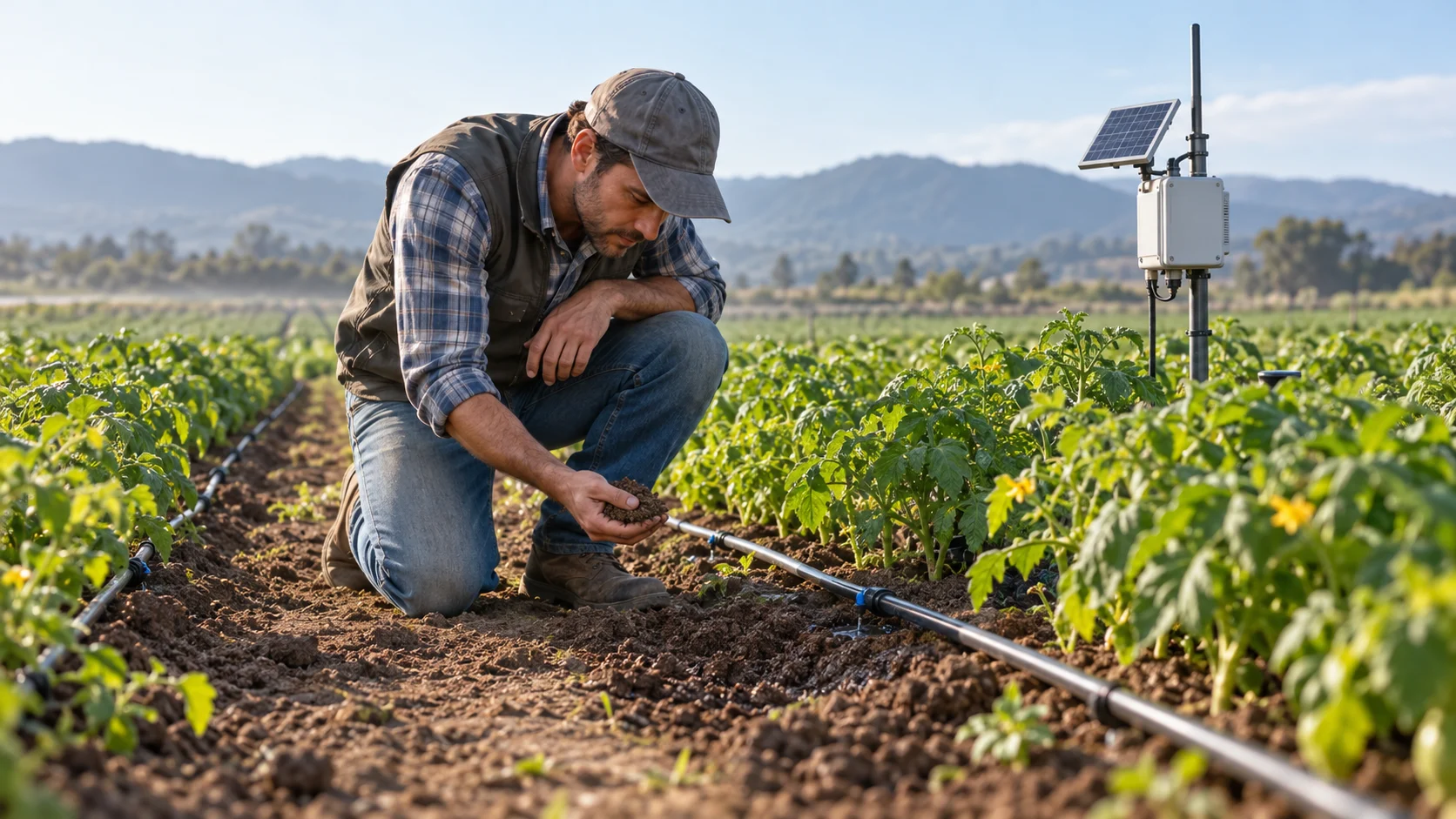
Remote visibility and automatic irrigation are different project stages. Before enabling control, agree on permissions, manual override arrangements, and the response to missing or unreliable sensor readings.
Have the irrigation and agronomy specialists review any proposed control rules. Document how pump and valve operation will be checked and who can stop the system when field conditions differ from the assumptions in the schedule.
- Maintain a clear map of sensors, valves, and irrigation zones.
- Keep records of irrigation events and field observations.
- Investigate unexpected readings before changing thresholds.
- Review the monitoring plan as crops and seasonal conditions change.
Evaluate a season, not just a dashboard
Choose a manageable pilot zone and decide what information the team will record. Review the usefulness of the data, the reliability of communication, and whether the monitoring process improved the clarity of irrigation decisions.
Avoid promising a universal water-saving percentage. Outcomes depend on the starting conditions, crop, equipment, and management changes. A measured trial gives the farm a stronger basis for deciding what to expand.
Explore cropifAI or discuss a field-monitoring project with Najhum.
Further reading
University of Minnesota Extension: Soil moisture sensors for irrigation scheduling.